





What's Happening?
Skin cycling is a structured nighttime skincare routine that involves rotating active ingredients over a four-night schedule. This method, popularized by Dr. Whitney Bowe, aims to optimize the benefits of potent skincare ingredients while minimizing irritation.
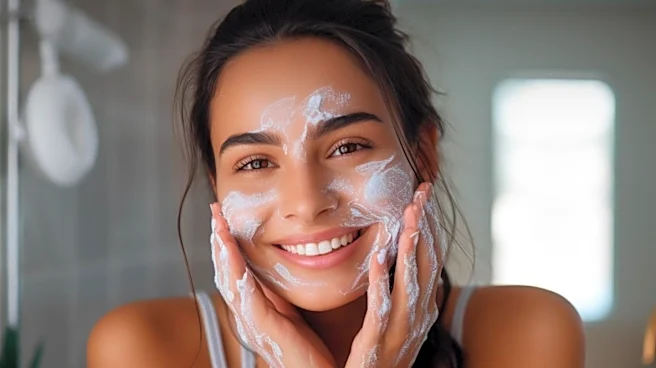
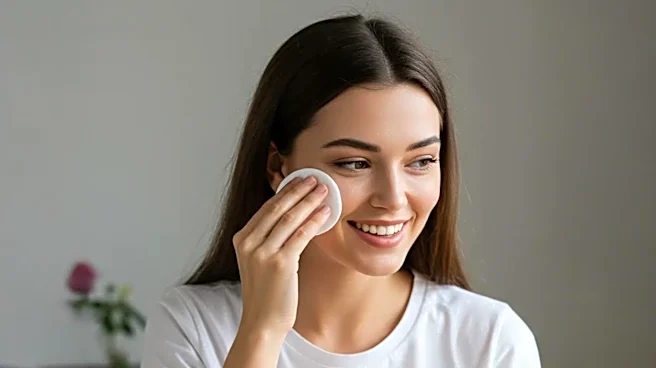
The routine begins with Night 1 dedicated to exfoliation using chemical exfoliants like AHAs or BHAs. Night 2 focuses on retinoids, incorporating products such as retinol or other vitamin A derivatives. Nights 3 and 4 are designated as recovery nights, emphasizing hydration and barrier repair. Throughout this cycle, the morning skincare routine remains consistent. This approach is designed to prevent skin overwhelm from excessive use of active ingredients, promoting healthier and more resilient skin. It is important to note that skin cycling is not a treatment for persistent skin conditions, for which professional dermatological advice is recommended. The method can be implemented using affordable local products, making it accessible for various budgets.
Why It's Important?
The skin cycling method offers a significant shift in how individuals approach their skincare routines, moving away from the common practice of layering multiple potent active ingredients daily, which can lead to irritation, redness, and a compromised skin barrier. By strategically rotating exfoliants and retinoids with recovery nights, this approach helps maintain skin health and integrity, potentially reducing adverse reactions often associated with aggressive skincare regimens. This is particularly important in a market saturated with powerful active ingredients, where consumers may inadvertently over-exfoliate or overuse products. The emphasis on recovery nights allows the skin barrier to repair and strengthen, leading to better tolerance of active ingredients and more sustainable results. This method also promotes a more mindful and less-is-more philosophy in skincare, encouraging users to understand their skin's needs rather than blindly following trends or accumulating numerous products.
What's Next?
As skin cycling gains wider recognition, it is likely to influence product development and marketing strategies within the skincare industry. Brands may begin to formulate products specifically designed to fit into a skin cycling regimen, or provide clearer guidance on how their existing products can be integrated into such a routine. Consumers can expect to see more educational content from dermatologists and skincare experts advocating for structured routines and emphasizing barrier health. There may also be an increased demand for products focused on hydration and barrier repair, as these are crucial components of the recovery nights. Furthermore, the popularity of skin cycling could lead to a broader re-evaluation of daily multi-step routines, potentially encouraging a more simplified and effective approach to skincare for many individuals.
Beyond the Headlines
Beyond its immediate benefits for skin health, skin cycling reflects a broader trend towards mindful consumption and a more holistic approach to wellness. In an era of information overload and constant new product launches, this method encourages consumers to be more intentional about their skincare choices and to prioritize long-term skin health over instant gratification. It also highlights the importance of understanding the science behind skincare ingredients and how they interact with the skin. This shift could empower consumers to become more discerning, moving away from impulse purchases driven by trends and towards routines that are genuinely beneficial for their individual skin types. Ethically, it promotes responsible product use, potentially reducing waste from unused or misused products and fostering a more sustainable approach to beauty.