




What's Happening?
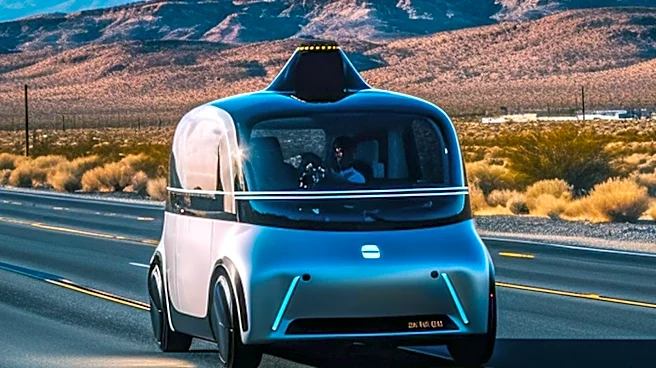
Zoox, an Amazon-owned company, has been granted a temporary exemption by the National Highway Traffic Safety Administration (NHTSA) to begin charging for its robotaxi rides in Las Vegas. This exemption allows Zoox to operate its autonomous vehicles, which
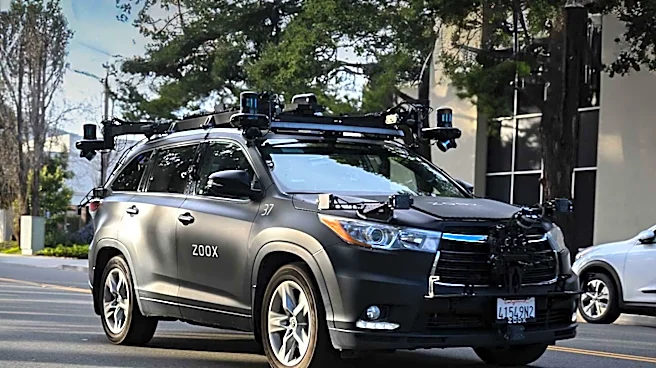
lack traditional driving controls such as brake pedals, gas pedals, and steering wheels, as part of a commercial ride-sharing service. The exemption is valid until July 31, 2028, and permits the deployment of up to 2,500 vehicles annually. Zoox's robotaxis are designed as four-seat pods with two seats facing each other and can travel up to 75 mph in either direction. The company has been operating in Las Vegas since 2019, initially using retrofitted Toyota SUVs to collect driving data. Zoox has already provided over 500,000 rides in Las Vegas and plans to expand its service with the new exemption.
Why It's Important?
The approval for Zoox to charge for its robotaxi services marks a significant milestone in the commercialization of autonomous vehicle technology. This development could pave the way for broader adoption of self-driving cars in urban transportation, potentially reducing traffic congestion and emissions. The exemption also highlights the evolving regulatory landscape as authorities adapt to new technologies. For Zoox, this represents an opportunity to establish a foothold in the competitive ride-sharing market, challenging traditional services like Uber and Lyft. The success of Zoox's operations could influence public perception and acceptance of autonomous vehicles, impacting future policy and investment in the sector.
What's Next?
Zoox plans to begin charging for rides in August, with details on pricing yet to be disclosed. The company will continue to operate its free rides for participants in its Explorer program in San Francisco. As Zoox expands its service, it will likely face scrutiny from regulators and the public, especially in light of past incidents involving its vehicles. The company will need to ensure the safety and reliability of its robotaxis to maintain trust and compliance with regulatory standards. Additionally, Zoox's progress may prompt other companies to seek similar exemptions, potentially accelerating the development and deployment of autonomous vehicles across the U.S.