






What's Happening?
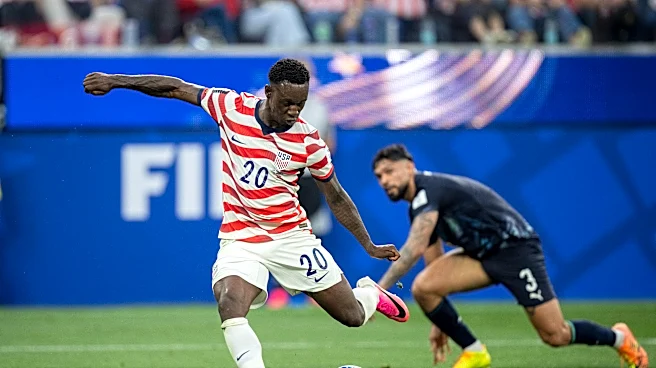
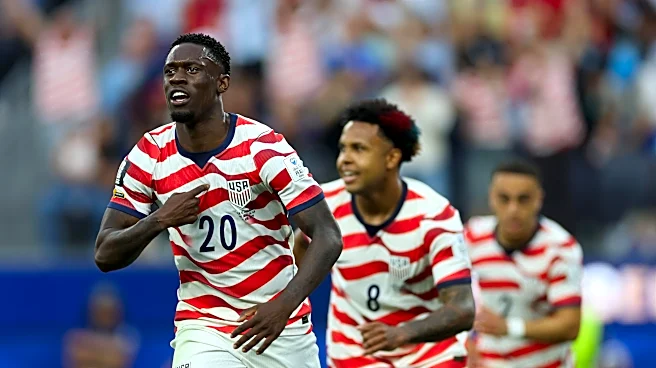
The 2026 World Cup has highlighted the complex eligibility rules that allow players to represent different countries. Folarin Balogun, who scored for the United States, exemplifies this process. Born in Brooklyn and raised in London, Balogun switched
allegiance from England to the U.S. in 2023, leveraging his American citizenship by birth. FIFA's rules require players to hold the nationality of a country and demonstrate a 'genuine link' through birth, parentage, or residency. Players can switch national teams if they have not played in official senior competitions, as seen with Balogun, who only played for England at the youth level.
Why It's Important?
The ability for players to switch national teams has significant implications for international soccer, affecting team compositions and competitive dynamics. It allows countries to strengthen their squads by recruiting players with diverse backgrounds, potentially altering the balance of power in international tournaments. This flexibility can also enhance the personal and professional opportunities for players, allowing them to represent countries with which they have strong personal ties. However, it raises questions about national identity and the criteria for representing a country on the world stage.