




What's Happening?
Hewlett Packard Enterprise (HPE) experienced a significant stock decline, falling approximately 10.45% to $55.60 from its previous close of $62.09. This downturn was primarily triggered by a Wall Street downgrade from Evercore ISI, which shifted its rating
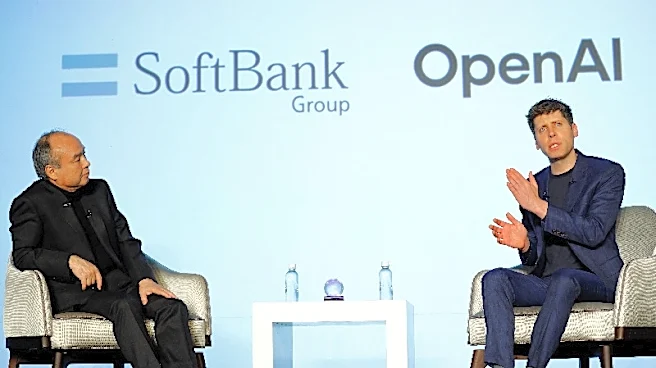
on HPE from 'Outperform' to 'In Line.' The downgrade cited valuation concerns after the stock had seen a remarkable 137% year-to-date rally. The broader market context also contributed to the decline, as there was a sector-wide pullback in artificial intelligence (AI) hardware names. This sentiment was further influenced by weekend commentary from AI industry leaders, including Anthropic CEO Dario Amodei, OpenAI CEO Sam Altman, and xAI's Elon Musk, who advocated for a slower pace of AI model development due to safety concerns. Despite this stock performance, HPE's fiscal third-quarter results were strong, with adjusted earnings of $1.11 per share surpassing estimates and revenue increasing by about 34% year over year to roughly $12.2 billion. Management also raised its full-year adjusted EPS guidance.
Why It's Important?
This stock movement for Hewlett Packard Enterprise highlights the volatile nature of the technology sector, particularly within the rapidly evolving AI hardware market. The downgrade, despite strong underlying financial performance, underscores how investor expectations and market sentiment can heavily influence stock valuations, especially after a period of significant growth. The broader pullback in AI hardware names suggests a potential re-evaluation of the sector's growth trajectory and risk profile, possibly due to concerns about the sustainability of rapid AI development and its associated costs. For the U.S. technology industry, this could signal a period of increased scrutiny on valuations and a shift towards more conservative investment strategies, even for companies with robust fundamentals. It also reflects the growing influence of public commentary from industry leaders on market sentiment, demonstrating how discussions around ethical development and safety in AI can have immediate financial repercussions for related companies.
What's Next?
Investors will closely monitor several factors in the coming sessions. The Federal Reserve's policy decisions this week could impact financing-sensitive AI hardware companies. Continued commentary from AI industry leaders regarding the pace of AI development will also likely sway sector sentiment. On a company-specific level, attention will turn to HPE's upcoming Networking Investor Day for further insights into supply-chain improvements, margin trajectory, and the integration of Juniper Networks. The bull case for HPE relies on its expanding orders and a strong contracted demand pipeline. However, the bear case centers on whether the stock, having experienced such a large gain, can continue to meet elevated expectations. Potential risks include persistent component shortages, margin pressure from a higher mix of AI systems, and the possibility of further valuation de-rating if AI sentiment remains cautious.
Beyond the Headlines
The recent stock decline of Hewlett Packard Enterprise, despite strong financial results, reveals a deeper tension between market enthusiasm for emerging technologies like AI and the practical realities of business operations and investor expectations. The rapid surge in AI hardware stocks has created a scenario where valuations may have outpaced fundamental growth, making them susceptible to even minor negative catalysts like an analyst downgrade. This situation also brings to light the ethical and societal implications of AI development, as concerns raised by industry leaders about slowing down AI progress for safety reasons can directly impact the financial performance of companies deeply invested in this technology. It suggests a potential shift in the narrative around AI, moving from unbridled growth to a more cautious and responsible development approach, which could have long-term implications for investment patterns and regulatory oversight in the tech sector.