



What's Happening?
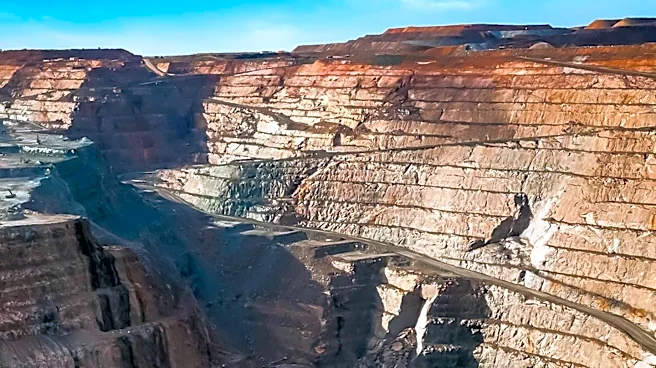
The Alliance of Sahel States (AES), comprising Mali, Burkina Faso, and Niger, is aggressively pursuing 'resource nationalism' by tightening mining codes, increasing state stakes in operations, and nationalizing gold mines. This movement is part of a broader
strategy to achieve financial sovereignty, mirroring efforts to establish a confederal bank and common currency. Mali's 2023 mining code increased the state's share in projects to approximately 35%, leading to significant changes in operations like the Fekola mine. Burkina Faso has gone further, establishing the Burkina Mining Participation Company (SOPAMIB) to hold and operate strategic assets, nationalizing mines such as Boungou and Wahgnion. Niger is applying similar sovereignty measures to its resources, including uranium. These actions are driven by a need for revenue amid sanctions and costly conflicts, and a desire to assert control over resources. Concurrently, these nations are turning to Russia for military support, offering privileged access to their mining sectors in a 'gold for security' exchange, a model previously seen in the Central African Republic and Sudan.
Why It's Important?
This shift in the Sahel has significant implications for global mining companies and international relations. Western mining majors are facing increased operational risks, including imposed renegotiations, higher state stakes, stock seizures, and international arbitration. While some companies are reducing their exposure, others are renegotiating terms, indicating a complex environment where states seek to balance control with maintaining industrial production. The reliance on Russia for security in exchange for mining access consolidates a geopolitical shift, potentially increasing Russian influence in the region and creating new dependencies for the Sahelian states. This 'gold for security' model also introduces new security risks, as the protection of mining sites may fall under para-state actors with different rules of engagement and accountability. Furthermore, the informal artisanal gold sector continues to finance armed groups and criminal networks, complicating efforts to stabilize the region and raising concerns about conflict gold contamination for international buyers and processors.
What's Next?
The trend of resource nationalism in the Sahel is expected to continue, with states further asserting control over their mining sectors. Western mining companies will likely face ongoing pressure to renegotiate terms or divest, while new opportunities may arise for non-Western entities, particularly from Russia. The AES's efforts to build financial sovereignty through a confederal bank and common currency will likely progress in parallel with their mining strategies. The security landscape in the region will remain complex, with the involvement of Russian security forces potentially altering dynamics with armed groups. Efforts to combat illicit gold trafficking will also intensify, though the informal nature of artisanal mining presents significant challenges. Companies operating in or sourcing from the region will need to enhance their due diligence to mitigate risks associated with conflict gold and comply with international standards.
Beyond the Headlines
The nationalization of gold mines in the Sahel reflects a broader global trend of resource nationalism, where developing nations seek greater control over their natural wealth. This movement challenges established international investment norms and could lead to a re-evaluation of risk for extractive industries in politically volatile regions. Ethically, the 'gold for security' model raises questions about the accountability of security providers and the potential for human rights abuses in resource-rich areas. Legally, disputes over mining contracts and nationalizations could lead to increased international arbitration cases, testing the boundaries of sovereign rights versus investor protections. Culturally, the assertion of sovereignty over resources can be seen as a post-colonial effort to reclaim national assets and redefine economic relationships with former colonial powers and Western corporations. The long-term implications could include a more fragmented global resource market and a shift in geopolitical alliances, with resource-rich nations increasingly aligning with partners willing to offer security and investment without traditional Western conditionalities.