





What's Happening?
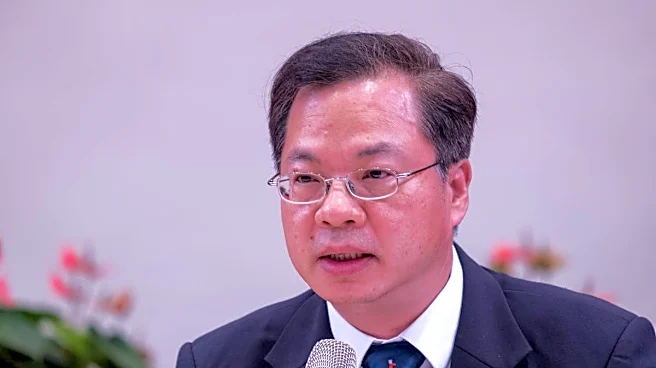
ASML Japan, a subsidiary of the Dutch electronics company Advanced Semiconductor Materials Lithography (ASML), announced plans to increase its Japanese workforce from 500 to 700 employees by 2030. This expansion aims to provide faster support to key chipmakers
like TSMC and Rapidus. ASML Japan President Fujiwara Shojiro stated that new hires will be strategically located closer to customer facilities. The company opened its Hokkaido office in 2024 to assist a Rapidus facility, where the number of engineers has already grown from 24 to 50 as Rapidus prepares for 2 nm chip production starting in 2027. Additionally, ASML is positioning workers in Kumamoto prefecture to support TSMC's second fab, which is currently under construction. TSMC is collaborating with Sony on this project to produce advanced image sensor chips for smartphones, with production anticipated to begin in 2029.
Why It's Important?
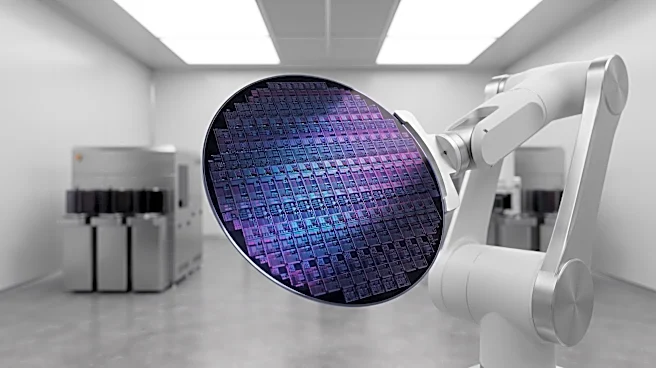
This expansion by ASML Japan is crucial for the global semiconductor industry, which has significant implications for U.S. technology and economic interests. ASML is the sole producer of extreme ultraviolet (EUV) lithography machines, which are essential for manufacturing advanced chips, including those used in U.S. data centers, AI applications, and defense technologies. By bolstering its support for TSMC and Rapidus, ASML is directly contributing to the stability and advancement of the global semiconductor supply chain. This move helps ensure the continued production of cutting-edge chips that power U.S. innovation and competitiveness. A robust and efficient semiconductor supply chain is vital for U.S. industries, from consumer electronics to automotive and aerospace, reducing reliance on potentially vulnerable single points of failure and fostering technological leadership.
What's Next?
The increased workforce and localized support from ASML are expected to facilitate the timely and efficient ramp-up of advanced chip production by Rapidus and TSMC in Japan. Rapidus is on track to begin 2 nm chip production in 2027, while TSMC's second fab in Kumamoto is slated for image sensor chip production by 2029. This will likely lead to a more diversified and resilient global semiconductor manufacturing landscape. For the U.S., this means a more stable supply of advanced chips, which is critical for various sectors. The enhanced support infrastructure could also encourage further investment and collaboration in semiconductor research and development, potentially benefiting U.S. companies through access to advanced manufacturing capabilities and a more competitive market for chip components.
Beyond the Headlines
The strategic positioning of ASML's workforce highlights a broader trend of regionalizing semiconductor supply chains to enhance resilience and reduce geopolitical risks. As nations like the U.S. and Japan invest heavily in domestic chip manufacturing capabilities, the role of key equipment suppliers like ASML becomes even more critical. This move by ASML could be seen as a response to global calls for greater supply chain security and a de-risking strategy in the face of geopolitical tensions. The collaboration between ASML, TSMC, and Rapidus underscores the complex interdependencies within the semiconductor ecosystem, where specialized technology providers are indispensable for the success of national chip initiatives. This also points to the increasing importance of skilled labor and technical support in maintaining high-tech manufacturing operations, potentially influencing educational and workforce development policies in countries aiming to boost their semiconductor industries.