






What's Happening?
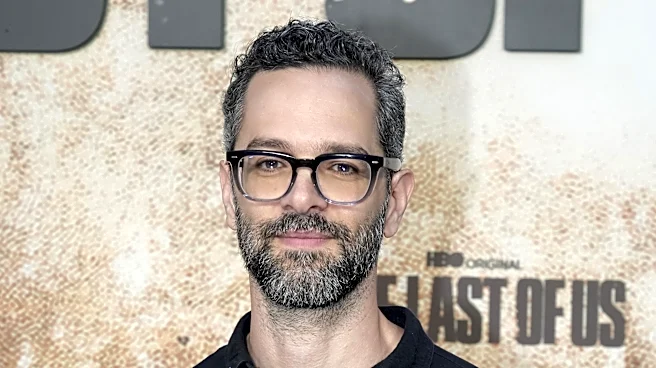
Neil Druckmann, the original writer and creative director of the 2013 video game 'The Last of Us,' has successfully transitioned his work to a television series on HBO. The post-apocalyptic show, which premiered on January 15 and concluded its first season
on March 12, has been widely praised for its faithful adaptation and enhanced storytelling. The series, co-written by Druckmann and Craig Mazin, follows Joel Miller and 14-year-old Ellie as they navigate a United States ravaged by a fungal pandemic that began in 2003. The show's pilot episode attracted 4.7 million viewers in the U.S. on its opening night, marking it as HBO's second-highest streaming debut since 2010. Critics and fans have lauded the series for its character development, emotional depth, and the performances of its lead actors, Pedro Pascal and Bella Ramsey, who portray Joel and Ellie, respectively. The show has been renewed for a second season.
Why It's Important?
The success of 'The Last of Us' television series is significant for the entertainment industry, particularly in demonstrating the potential for high-quality video game adaptations. Historically, many video game-to-screen adaptations have struggled to capture the essence of their source material, often disappointing fans and critics alike. This series, however, has broken that trend, proving that with the original creative visionaries like Neil Druckmann involved, such projects can achieve critical and commercial success. The show's ability to attract a massive audience, including both long-time fans of the game and new viewers, highlights a growing appetite for well-produced, character-driven narratives within the post-apocalyptic genre. This success could pave the way for more careful and authentic adaptations of other beloved video game franchises, influencing future production strategies in Hollywood and potentially expanding the reach of gaming culture into mainstream television.
What's Next?
Following its successful first season, 'The Last of Us' has been renewed for a second season, indicating continued investment in the franchise's television future. Fans are eagerly anticipating how the narrative will evolve, especially given the show's willingness to take creative liberties while remaining true to the game's core themes. The series' strong performance in viewership and critical reception suggests it will be a strong contender during upcoming award seasons, potentially sweeping multiple categories. The continued involvement of Neil Druckmann and Craig Mazin is expected to maintain the show's high quality and narrative integrity. This ongoing success could also encourage other video game developers to explore similar adaptation opportunities, potentially leading to a new era of high-caliber video game-inspired television and film projects.
Beyond the Headlines
The acclaim for 'The Last of Us' extends beyond its entertainment value, touching upon deeper cultural and artistic implications. The series' exploration of themes such as 'found family,' survival, and humanity in the face of extreme adversity resonates deeply with contemporary audiences, reflecting broader societal anxieties and hopes. Its nonlinear timeline and use of flashbacks enrich the storytelling, offering a sophisticated narrative structure that elevates it beyond typical genre fare. The show's ability to evoke strong emotional responses, as noted by viewers, underscores the power of well-crafted narratives to connect with audiences on a profound level. This success challenges the long-held perception that video games are merely a niche form of entertainment, demonstrating their capacity to inspire complex, critically acclaimed, and widely appealing stories across different media. It also highlights the increasing convergence of gaming and traditional media, blurring the lines between interactive and passive storytelling experiences.