

What's Happening?
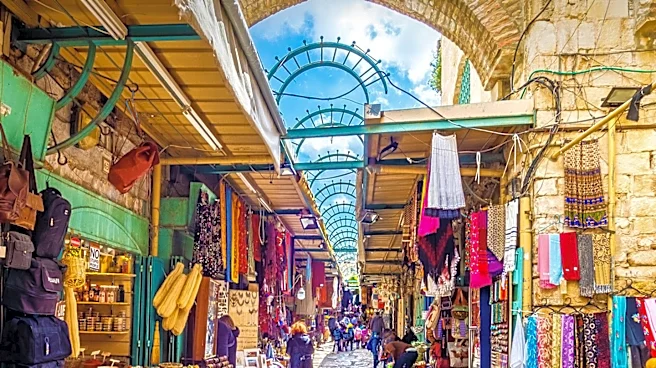
A traveler on a press tour focused on antisemitism, sponsored by the Or Ofir Foundation and the Israeli Ministry of Tourism, recounted their first visit to Israel, specifically highlighting an experience at the Carmel Market in Tel Aviv. The traveler described
the market as a bustling open-air 'shuk' filled with diverse people—Jews, Arabs, tourists, and locals—engaging in activities like salsa dancing. The market offered a vibrant sensory experience with music, various food smells, and overflowing stalls of fresh produce, baked goods, and Middle Eastern sweets. This visit occurred on a Friday afternoon, just hours before Shabbat began, capturing a lively scene of cultural interaction and daily life. The traveler noted the prevalence of Jewish symbols like the Star of David and the Israeli flag, contrasting it with their experience as a minority in the U.S., while also observing Israel's diverse population living side-by-side.
Why It's Important?
This account offers a firsthand perspective on the cultural vibrancy and diversity within Israel, particularly in Tel Aviv, which can counter common narratives that often focus solely on conflict. For U.S. audiences, it provides a glimpse into the daily life and social fabric of a key ally, showcasing aspects of coexistence and cultural richness that might not be widely known. The traveler's observations about Israelis resembling Americans in appearance and daily routines, such as traffic congestion, help to humanize the region and foster a sense of commonality. Furthermore, the description of Israel as a 'melting pot' where various ethnic and religious groups interact, sometimes confrontational but often focused on domestic life, underscores the complex social dynamics beyond political headlines. This perspective can contribute to a more nuanced understanding of Israeli society among those in the U.S. interested in international relations and cultural studies.
What's Next?
While the article is a personal reflection and does not detail specific future events, it implicitly suggests that continued cultural exchange and tourism can foster greater understanding. For individuals and organizations involved in promoting interfaith dialogue or combating antisemitism, such firsthand accounts can serve as valuable tools to illustrate the multifaceted reality of Israel. The positive portrayal of cultural integration and daily life in Tel Aviv might encourage more U.S. citizens to visit Israel, potentially boosting tourism and strengthening bilateral cultural ties. Future press tours and cultural exchange programs could build upon these types of experiences to further bridge cultural gaps and provide deeper insights into the region's social landscape, moving beyond purely political or conflict-driven narratives.
Beyond the Headlines
The narrative subtly highlights the power of personal experience in shaping perceptions, especially concerning regions often viewed through a narrow lens of geopolitical conflict. The traveler's initial surprise at the diversity and normalcy of life in Tel Aviv underscores a broader challenge in international reporting: the tendency to prioritize conflict over everyday life and cultural richness. This account suggests that beneath the political headlines, there is a vibrant, multicultural society where people from different backgrounds engage in shared cultural activities like market visits and dancing. It also touches upon the ethical dimension of travel and observation, where direct engagement can dismantle preconceived notions and foster empathy. The mention of Israeli innovations like drip irrigation, born out of necessity, also points to the nation's ingenuity and contributions beyond its geopolitical context, offering a more holistic view of its societal contributions.