


What's Happening?
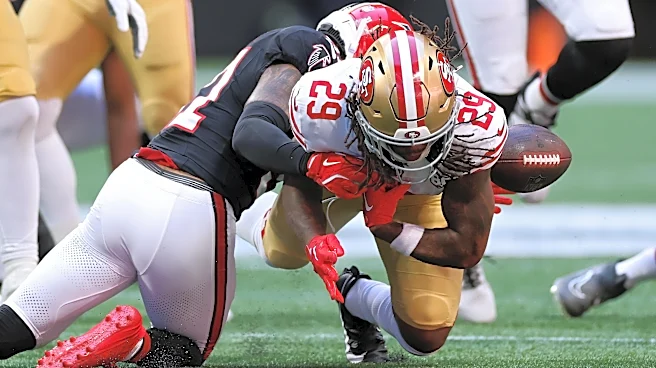
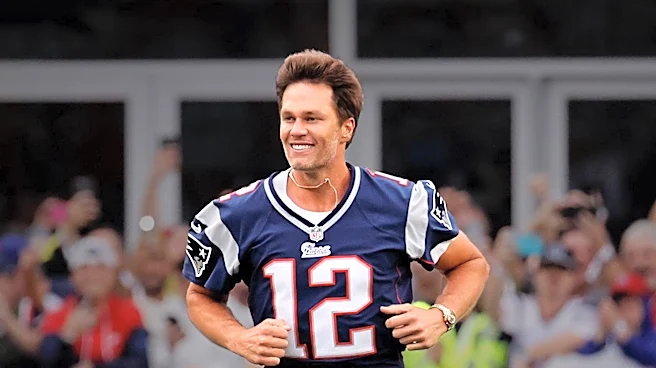
Retired NFL quarterback Tom Brady has publicly reiterated his long-standing grudge against the San Francisco 49ers, the team he supported during his childhood in California. The resentment stems from the 2000 NFL Draft, where the 49ers passed on Brady six
times, ultimately selecting quarterback Giovanni Carmazzi in the third round. Brady, who was eventually drafted by the New England Patriots as the 199th pick in the sixth round, stated that he still 'hates the 49ers' as a 'nameless, faceless program' for their decision. He clarified that his animosity is directed at the organization's decision-makers, not the players. This rejection became a significant source of motivation for Brady throughout his career, which saw him win seven Super Bowls.
Why It's Important?
This revelation from Tom Brady underscores the profound impact of draft decisions and perceived slights on the careers and motivations of professional athletes. For the San Francisco 49ers, their decision to overlook Brady in 2000 is now etched in NFL history as one of the most significant 'what-ifs,' given Brady's unprecedented success. This narrative serves as a cautionary tale for NFL franchises regarding talent evaluation and the long-term consequences of draft choices. It also highlights the psychological aspect of elite sports, where perceived disrespect can fuel decades of competitive drive. Brady's continued public expression of this grudge, even in retirement, demonstrates the deep personal connection athletes have to their professional journeys and the lasting memory of pivotal career moments.
What's Next?
Tom Brady's comments are likely to reignite discussions among NFL fans and analysts about the 2000 NFL Draft and the 49ers' decision. While Brady is retired, his remarks could add another layer to the historical rivalry between the Patriots (and later the Buccaneers) and the 49ers, particularly when their paths crossed. The 49ers organization may face renewed scrutiny or commentary regarding their past draft strategies. For Brady, this serves as another anecdote reinforcing his 'underdog' narrative, a theme he has often embraced. It's improbable that this revelation will lead to any direct action, but it will certainly remain a talking point in discussions about NFL history and the careers of its legendary figures.
Beyond the Headlines
Beyond the immediate sports context, Brady's enduring grudge speaks to the human element of professional competition and the lasting impact of early career experiences. It illustrates how personal narratives, even those rooted in perceived rejection, can become powerful motivators that shape an individual's trajectory and public persona. The story also subtly critiques the often-imperfect science of talent scouting in professional sports, where potential can be overlooked, leading to monumental missed opportunities. This narrative resonates beyond football, touching on themes of perseverance, proving doubters wrong, and the psychological drive that propels individuals to achieve greatness, even years after the initial slight.