




What's Happening?
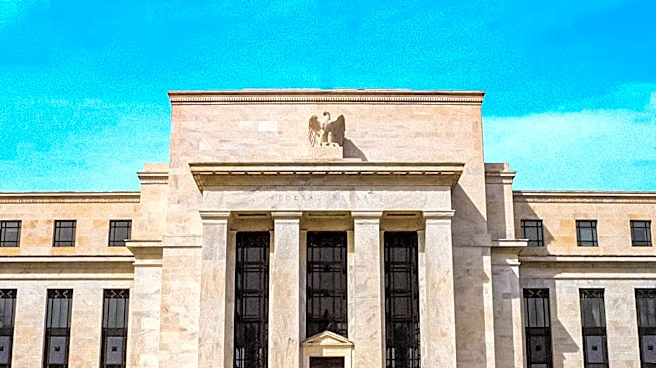
Federal Reserve Governor Lisa Cook and Beth Hammack dissented from a recent Federal Reserve vote, advocating for an additional quarter-point interest rate hike. This occurred during a 10-2 vote on October 28, where the Fed maintained its target range
at 3.75%–4%, a level established in September. The minutes from this meeting, released on November 18, indicated that 'almost all participants' believed further rate increases would likely be appropriate. Some participants even suggested considering a move of more than 25 basis points at the subsequent meeting if inflation data proved unfavorable. This comes as gold prices have seen a significant decline, with spot gold falling to $3,525.25 an ounce, a 14-month low, and an approximate 9.2% drop in a week. The decline is attributed to expectations of further Fed rate hikes, which strengthen the dollar and Treasury yields, and investors selling gold to cover losses from an AI stock sell-off.
Why It's Important?
The dissent by Governor Cook and Beth Hammack signals a more hawkish stance within the Federal Reserve, indicating a strong concern about persistent inflation and a desire for more aggressive monetary tightening. This internal disagreement highlights the ongoing debate within the Fed regarding the appropriate pace and magnitude of interest rate adjustments to control inflation without triggering a severe economic downturn. For the U.S. economy, higher interest rates generally lead to increased borrowing costs for consumers and businesses, potentially slowing economic growth. The decline in gold prices, often seen as a safe-haven asset, reflects market expectations of continued monetary tightening and a stronger dollar, making gold less attractive. This trend impacts investors, particularly those holding gold as a hedge against inflation or economic uncertainty, and could influence broader commodity markets and investment strategies.
What's Next?
The market is now anticipating further actions from the Federal Reserve, with a 96% chance of a quarter-point Fed hike in December, according to CME FedWatch. The upcoming FOMC meeting in early December, along with the release of U.S. November CPI data, will be crucial in determining the Fed's next steps. If inflation data remains elevated, the pressure for additional rate hikes, potentially even larger ones, will intensify. This could lead to continued strengthening of the dollar and further downward pressure on gold prices. Investors will closely monitor these developments, adjusting their portfolios in response to the evolving monetary policy outlook. The impact on the stock market, particularly the tech sector, and the broader economy will also be a key area of observation as the Fed navigates its inflation-fighting strategy.
Beyond the Headlines
The Federal Reserve's internal debates and subsequent policy decisions have far-reaching implications beyond immediate market reactions. The differing views among Fed officials, as evidenced by the dissents, underscore the complexity of managing monetary policy in a dynamic economic environment. This situation highlights the delicate balance between controlling inflation and supporting economic growth, a challenge that can lead to significant shifts in economic sentiment and investor behavior. The correlation between rising interest rates, a stronger dollar, and declining gold prices illustrates fundamental economic principles at play. Furthermore, the mention of investors selling gold to cover AI stock losses points to the interconnectedness of various asset classes and the potential for contagion effects across different market segments during periods of volatility. This scenario could also prompt a re-evaluation of traditional safe-haven assets and investment diversification strategies in the face of evolving market dynamics.