







What's Happening?
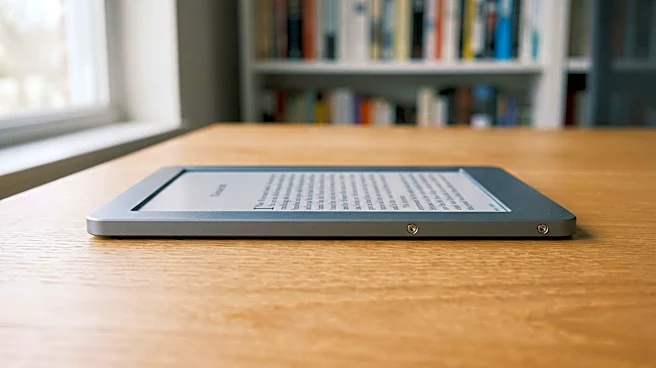
Amazon has launched a new Kindle model featuring an aluminum chassis, incorporating recycled metal into its entry-level e-reader line. This new design offers a premium, matte-finished metallic appearance that resists fingerprints and eliminates body flex.
The aluminum Kindle includes built-in magnets for attaching folio covers and features accessible external Torx screws, enabling users to replace the battery. This model also comes with 32 GB of storage and an ad-free lock screen as a standard feature. Both the aluminum and standard plastic Kindle models now support user-replaceable batteries, a development that aligns with upcoming European Union regulations concerning battery replaceability in electronic devices. The battery access mechanism differs between the two versions: the plastic model allows for tool-free back panel removal, while the aluminum version requires the removal of two small hex screws.
Why It's Important?
The introduction of an aluminum Kindle with user-replaceable batteries signifies a notable shift in consumer electronics design, emphasizing sustainability and repairability. This move by Amazon, a major player in the e-reader market, could influence other manufacturers to adopt similar practices, particularly in anticipation of stricter regulations like those in the EU. For consumers, the ability to replace batteries extends the lifespan of devices, potentially reducing electronic waste and offering long-term cost savings. The use of recycled aluminum also highlights a growing trend towards more environmentally conscious manufacturing processes. This development could set a new standard for durability and user-serviceability in portable electronic devices, impacting consumer expectations and industry design philosophies.
What's Next?
The adoption of user-replaceable batteries in Amazon's Kindle line may prompt other electronics manufacturers to re-evaluate their product designs, especially as global regulations on device repairability continue to evolve. Consumers might increasingly prioritize devices that offer easier maintenance and longer lifespans, potentially driving demand for more sustainable product features. Amazon may further integrate recycled materials into its other product lines, expanding its commitment to environmental responsibility. The success of this new Kindle model could also influence future product development cycles, leading to more repair-friendly designs across various consumer electronics categories. This could foster a more circular economy for electronic devices, reducing the frequency of device upgrades and overall waste.
Beyond the Headlines
This development touches upon broader themes of consumer rights, environmental responsibility, and the evolving regulatory landscape for electronic goods. The 'right to repair' movement, which advocates for consumers' ability to repair their own devices, gains significant traction with such product innovations. Amazon's decision to incorporate user-replaceable batteries, even if partly driven by impending EU regulations, sets a precedent that could empower consumers globally. It also underscores the increasing pressure on tech companies to balance innovation with sustainability and ethical manufacturing. This shift could lead to a re-evaluation of planned obsolescence strategies, fostering a market where product longevity and repairability become key competitive advantages rather than niche features.