









What's Happening?
French shipping giant CMA CGM Group and Saudi Arabia’s Red Sea Gateway Terminal (RSGT) have committed to a $434 million joint venture to develop and operate the new Terminal 4 at Jeddah Islamic Port. This significant investment, supported by the Saudi Ports
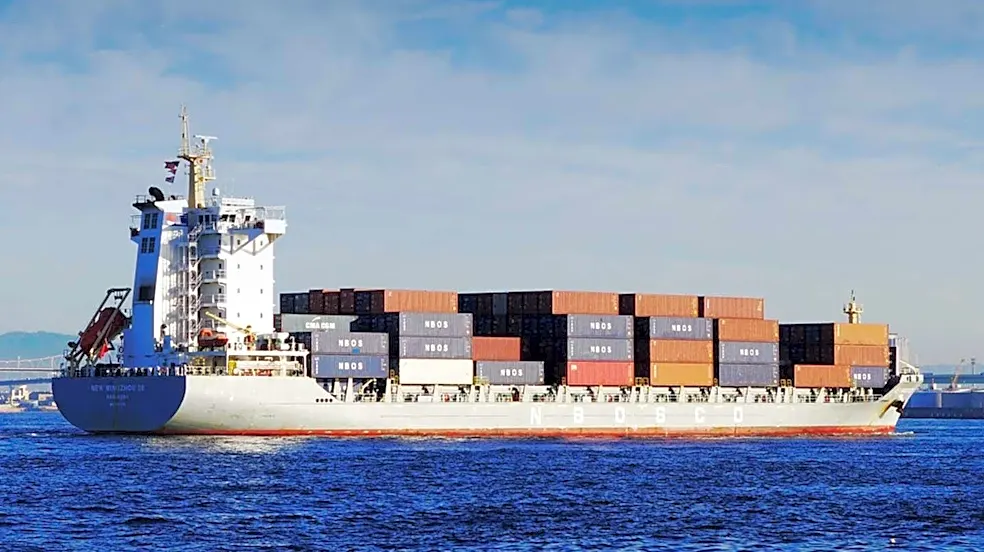
Authority (Mawani), represents one of the largest foreign direct investment commitments in Saudi Arabia’s maritime sector. The expansion aims to enhance Jeddah Islamic Port's operational capabilities, specifically by constructing advanced deep-water berths to accommodate ultra-large container vessels (ULCVs) and installing 10 STS cranes along with automated terminal equipment. This move comes despite ongoing geopolitical crises and severe security risks in the Red Sea, a primary transit corridor where global ocean carriers have been diverting vessels around Africa.
Why It's Important?
This investment signals a long-term commercial confidence in Red Sea logistics and Saudi Arabia's maritime vision, even as the region remains one of the world's most dangerous trade routes. For CMA CGM, it strengthens its global terminal portfolio, particularly in the Red Sea and the Middle East. The development is also a step towards Saudi Arabia’s Vision 2030 ambitions, aiming to transform the kingdom into a pivotal hub connecting Asia, Europe, and Africa. The decision to invest amid continued maritime volatility, including Houthi attacks in the Red Sea and naval conflicts in the Strait of Hormuz, suggests that major industry players anticipate these disruptions to be temporary and recognize the long-term strategic potential of key locations and infrastructure.
What's Next?
The joint venture will proceed with the development of Terminal 4, focusing on infrastructure that can handle next-generation mega-container ships. This includes the construction of deep-water berths and the installation of advanced automated terminal equipment. The success of this investment will likely depend on the evolving geopolitical landscape in the Red Sea and Strait of Hormuz. If security improves, Jeddah Islamic Port could solidify its role as a major regional hub, attracting more shipping traffic and further foreign investment. Conversely, continued instability could pose challenges to the project's operational efficiency and profitability, potentially impacting global supply chains that rely on this critical maritime corridor.
Beyond the Headlines
The investment highlights a paradox in global shipping: companies are making substantial long-term commitments in regions currently experiencing extreme volatility. This suggests a strategic calculation that the economic benefits of these locations, particularly their geographic advantage as trade chokepoints, outweigh the immediate risks. It also underscores the increasing importance of resilient infrastructure in maintaining global supply chain stability. The move could also intensify competition among regional ports, pushing others to upgrade their facilities to attract and retain shipping lines. Furthermore, it reflects a broader trend where nations like Saudi Arabia are leveraging their strategic locations to diversify their economies and enhance their global logistical footprint, even in the face of significant challenges.