







What's Happening?
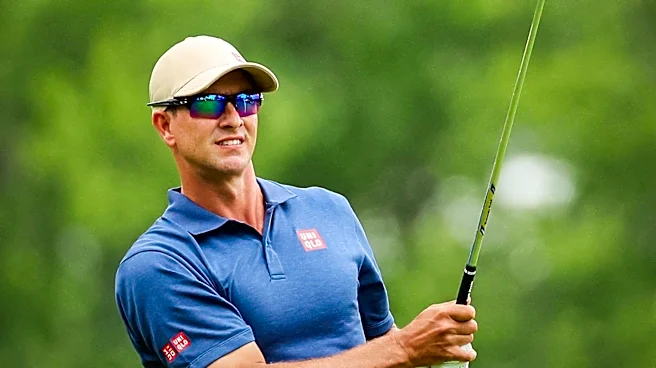
Actor Adam Scott recently disclosed that he has been sober for 12 years, having stopped drinking alcohol without making a significant public announcement about it. During an appearance on 'Therapuss' with Jake Shane on August 27, Scott stated, 'I don’t
drink. I stopped drinking like 12 years ago and it wasn’t a thing. I was never a big drinker, I just kind of faded it out.' He further noted that his sobriety has contributed to his excellent health, mentioning, 'I haven’t been sick in two years.' This is the first time Scott has openly discussed his long-term abstinence from alcohol, though he had previously hinted at his disinterest in alcohol and drugs.
Why It's Important?
Adam Scott's revelation about his 12 years of sobriety is significant as it contributes to the growing public discourse around alcohol consumption and mental and physical well-being, particularly among public figures. His casual yet firm statement that he 'faded it out' and was 'never a big drinker' challenges the common perception that sobriety is only for those with severe addiction issues, highlighting that individuals can choose abstinence for general health and lifestyle improvements. This can resonate with many Americans who are increasingly mindful of their health choices and may be considering reducing or eliminating alcohol from their lives. His experience provides a relatable example of long-term sobriety and its positive health outcomes, potentially inspiring others to explore similar paths without the stigma often associated with discussions of addiction.
What's Next?
Scott's public acknowledgment of his sobriety may lead to increased media attention on his personal health choices and potentially open doors for him to discuss the benefits of an alcohol-free lifestyle in more detail. While he has not indicated plans to become a sobriety advocate, his comments could inadvertently encourage conversations about alcohol's role in society and individual well-being. This could also prompt other celebrities to share their own experiences with sobriety, further normalizing the choice to abstain from alcohol for health reasons. For Scott, maintaining his 'tip-top shape' and continued success in his acting career will serve as a testament to the positive impact of his lifestyle choices.
Beyond the Headlines
Scott's disclosure touches upon the broader cultural shift in attitudes towards alcohol, moving away from its pervasive presence in social settings towards a more health-conscious approach. His statement, 'Alcohol is poison,' though deadpanned, reflects a growing sentiment among some that alcohol, even in moderation, can be detrimental to health. This perspective challenges long-held societal norms and the romanticization of drinking. It also subtly highlights the personal agency involved in health decisions, where individuals can quietly make significant lifestyle changes without needing a dramatic 'rock bottom' moment. This quiet revolution in personal health choices, exemplified by Scott, could have long-term implications for public health trends and the beverage industry.