









What's Happening?
The commercial aerospace industry, which has been experiencing a post-COVID recovery, is now facing potential challenges as a new survey indicates a possible demand slowdown. Conducted by McKinsey & Company and Aviation Week, the survey involved over 150
commercial aerospace leaders and revealed a growing gap between airline sentiment and the rest of the value chain. Nearly half of the respondents anticipate a demand slowdown, with three-quarters expecting growth to fall below the historical baseline of 3-5% revenue passenger kilometer growth over the next two to three years. The International Air Transport Association (IATA) forecasts global air passenger traffic to grow by only 2.1% in 2026, significantly lower than earlier projections. Airlines are already feeling the pressure, with 54% reporting worsening business conditions compared to six months ago. However, only 30% of OEMs and suppliers report similar concerns, and lessors show the least worry, with just 17% expecting a slowdown.
Why It's Important?
The potential demand slowdown in the commercial aerospace industry could have significant implications for various stakeholders. Airlines, which are closest to the end traveler, may face financial pressures, leading to strategic decisions such as parking or retiring aircraft. This could impact aftermarket suppliers who currently benefit from legacy fleet maintenance. The survey highlights structural incentive misalignments within the industry, where OEMs are driven by delivery volumes, and suppliers may hesitate to invest in new tooling. A rapid adjustment to these changes may be challenging, as 77% of respondents believe they can adapt strategies within six months, but McKinsey remains skeptical. The industry's readiness for rapid change is questioned, suggesting that the potential slowdown could disrupt the value chain more than anticipated.
What's Next?
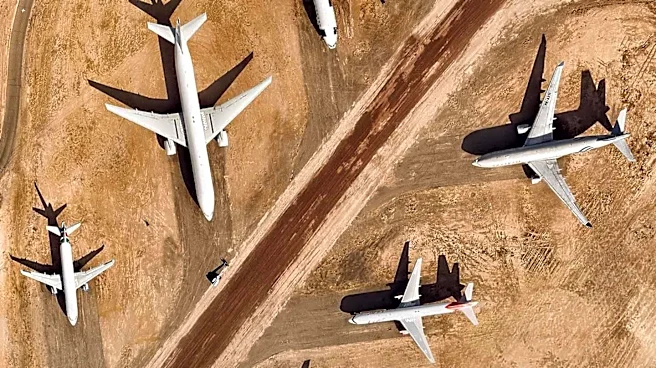
If the anticipated demand slowdown materializes, airlines may prioritize retiring older aircraft over deferring new deliveries, potentially affecting the aftermarket suppliers reliant on legacy maintenance. The industry may need to reassess its strategies and align incentives across the value chain to mitigate the impact. Stakeholders might explore new partnerships or technological advancements to adapt to changing market conditions. The survey's findings suggest that while a collapse is not imminent, the industry must prepare for a possible shift in demand dynamics and ensure collective readiness to navigate the challenges ahead.