
What's Happening?
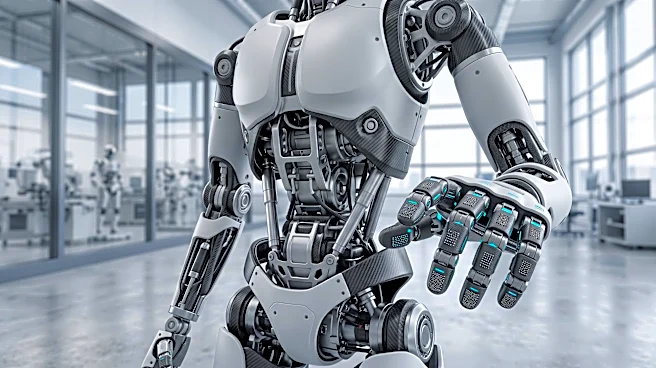
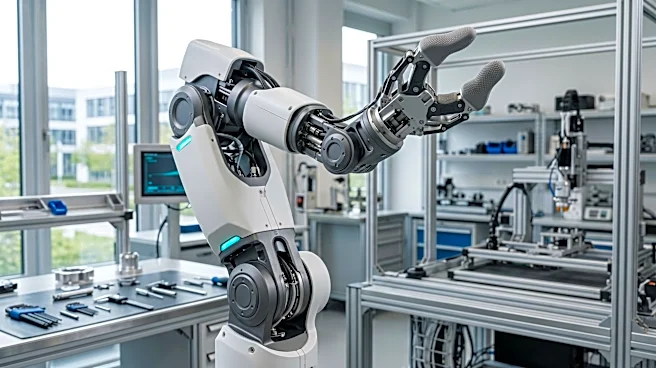
Khameleon, a new robotics company, is developing a single robot designed to perform multiple tasks across various service environments, including hotels, offices, and hospitals. This initiative marks a significant
shift from traditional robotics, where robots were typically programmed for a single, fixed function within a confined space. The company's approach focuses on robots that can learn tasks rather than being explicitly programmed, enabling greater versatility. The team behind Khameleon includes Donghoon Lee, Wenliang Zhao, and Jinseop Sim, who bring extensive experience from leading technology companies. Lee, Zhao, and Sim have contributed to autonomy at Tesla, perception at Meta, and robotics at Bear Robotics, respectively. This collective expertise in artificial intelligence and practical robot deployment positions Khameleon to address the evolving demands of the service sector.
Why It's Important?
This development is important because it signifies a fundamental change in the application and capabilities of robotics within the U.S. service industry. By creating robots that can learn and adapt to various tasks, Khameleon is addressing a critical need for flexible automation in sectors like hospitality and healthcare, which often involve diverse and dynamic operational requirements. The ability of a single robot to handle multiple jobs, such as those found in hotel room turnovers, could lead to increased efficiency and potentially alleviate labor shortages in these industries. The involvement of individuals with backgrounds from Tesla, Meta, and Bear Robotics underscores the growing convergence of advanced AI and practical robotics, suggesting a future where intelligent machines play a more integrated role in daily operations, impacting job roles and service delivery models across the nation.
What's Next?
The immediate next steps for Khameleon will likely involve further development and testing of their learning-based robot in real-world service environments. The company's focus on the hotel industry, particularly for tasks like room turnover, suggests that initial deployments could target this sector to demonstrate the robot's multi-tasking capabilities. As the technology matures, Khameleon may expand its reach into offices and hospitals, tailoring the robot's learning algorithms to the specific needs of those environments. The success of this approach could encourage other robotics companies to invest in similar learning-based systems, potentially accelerating the adoption of versatile robots across various U.S. service industries. Stakeholders, including hotel chains, healthcare providers, and office management companies, will be closely watching these developments for potential solutions to operational challenges.
Beyond the Headlines
Beyond the immediate operational benefits, Khameleon's approach to learning robots raises broader implications for the future of work and human-robot interaction in the U.S. The shift from programmed robots to learning robots suggests a future where machines can adapt to new situations and even improve their performance over time, potentially leading to more sophisticated and autonomous systems. This could spark discussions about the ethical considerations of AI-driven decision-making in service roles and the need for robust regulatory frameworks. Furthermore, the increased integration of such robots in public-facing environments like hotels and hospitals could reshape public perception of robotics, moving them from industrial tools to everyday assistants. This evolution could also drive demand for new skill sets in the workforce, focusing on robot supervision, maintenance, and AI training, rather than repetitive manual tasks.