





What's Happening?
Rocket Lab, a launch and spacecraft company, announced on June 29 its intent to acquire Iridium for approximately $8 billion. The deal, approved by Iridium stockholders on September 24 with 99.6% of votes cast, involves a payment of $54 per share, comprising
$27 in cash and Rocket Lab stock. This acquisition is part of a growing trend in the space industry where satellite companies are seeking to integrate launch capabilities to ensure reliable access to orbit. The transaction is expected to close by mid-2027, pending regulatory approvals. Rocket Lab aims to combine Iridium’s global network and operational experience with its own launch and space systems capabilities, intending to eliminate third-party launch costs and guarantee orbital access amidst tightening launch capacity.
Why It's Important?
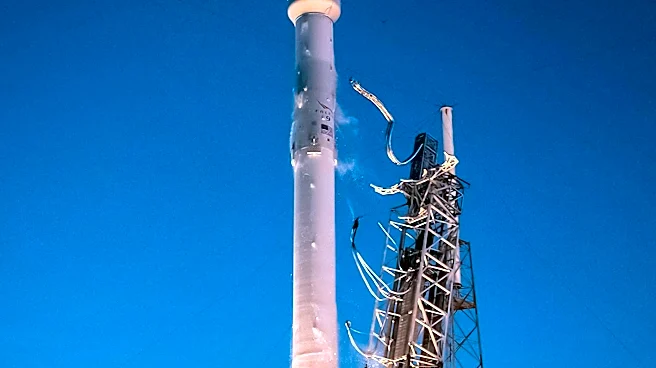
This acquisition signifies a strategic shift within the U.S. space industry, where companies are increasingly moving towards vertical integration to secure launch services. The current market faces challenges such as bottlenecks from launch providers, exemplified by SpaceX ceasing new rideshare reservations beyond late 2028 or early 2029, and other launch failures. By acquiring Iridium, Rocket Lab aims to gain control over its launch schedule and reduce dependence on external providers, which can be critical for deploying and replenishing satellite constellations. This move could set a precedent for other well-capitalized satellite operators, potentially leading to further consolidation in the sector. For the U.S. space economy, this trend could foster greater self-sufficiency and innovation, but it also raises questions about market competition and access for smaller players who cannot afford to own launch capabilities.
What's Next?
The acquisition is subject to regulatory approvals and is anticipated to close by mid-2027. During this period, both companies will work towards integrating their operations and technologies. Rocket Lab's larger Neutron rocket is still under development, and its successful deployment will be crucial for realizing the full benefits of this merger, particularly in terms of launching Iridium's future satellites. The combined entity will need to demonstrate how it can effectively leverage Iridium's L-band spectrum and subscriber base with Rocket Lab's launch capabilities to create a more robust and competitive offering in the global space market. The outcome of this merger will be closely watched by other industry players and investors, as it could influence future strategies for securing orbital access.
Beyond the Headlines
The Rocket Lab-Iridium merger highlights a deeper implication for the space industry: the increasing premium placed on assured access to space. As the number of satellites in orbit grows and the demand for space-based services intensifies, the reliability and availability of launch services become paramount. This trend could lead to a bifurcation in the market, where well-funded operators with integrated launch capabilities gain a significant competitive advantage, potentially marginalizing smaller companies that rely solely on third-party launch services. Ethical and legal considerations may arise regarding market dominance and fair access to launch opportunities. Ultimately, this development could reshape the long-term structure of the space economy, emphasizing self-reliance and vertical integration as key drivers of success.