





What's Happening?
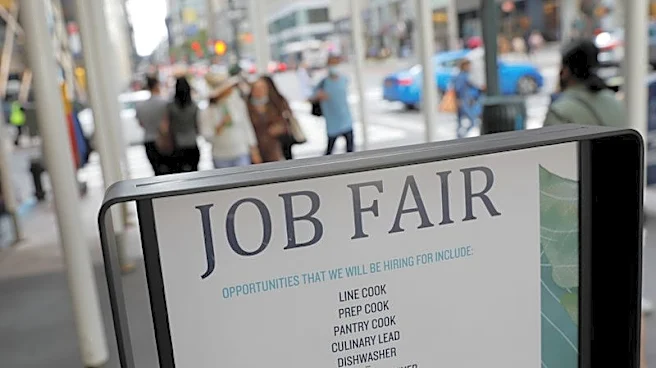
Kevin Hassett, the White House chief economist, has downplayed the significance of recent negative job reports, suggesting that the focus should be on sectors with job gains. The Bureau of Labor Statistics reported a loss of 23,000 jobs in July, with downward
revisions for May and June totaling 103,000 fewer jobs than previously reported. Despite these figures, Hassett emphasized growth in private sector employment, particularly in construction and manufacturing, attributing it to significant investments in the U.S. However, the employment-to-population ratio has reached its lowest level since September 2021, and the civilian labor force participation rate is at its lowest since February 2021. Critics argue that the current economic policies, including tariffs and immigration restrictions, are contributing to a stagnant job market.
Why It's Important?
The current job market data highlights potential weaknesses in the U.S. economy, raising concerns about the effectiveness of existing economic policies. The decline in manufacturing jobs, despite tariffs intended to boost the sector, suggests that these measures may not be achieving their intended outcomes. The low employment-to-population ratio and labor force participation rate indicate that fewer people are working or seeking work, which could have long-term implications for economic growth. The focus on selective job gains by government officials may not address the broader issues affecting the labor market, potentially impacting public confidence and economic stability.
What's Next?
The ongoing debate over the state of the U.S. economy is likely to continue, with policymakers and economists closely monitoring job market trends. Potential adjustments to economic policies, such as tariffs and immigration, may be considered to address the underlying issues. The upcoming months will be critical in determining whether the current economic strategies can effectively stimulate job growth and improve labor market conditions. Stakeholders, including businesses and labor organizations, may push for more comprehensive measures to support employment and economic recovery.