







What's Happening?
Boeing has reported stronger financial results for the second quarter, driven by an increase in commercial airplane deliveries. The company posted a revenue of $24.6 billion, marking an 8% increase from the previous year. Boeing's net loss narrowed to
$428 million, or 67 cents per share, compared to a loss of $612 million, or 92 cents per share, a year earlier. The company's backlog reached a record $715 billion, including over 6,200 commercial airplanes valued at $597 billion. Boeing's improved performance is attributed to higher deliveries and favorable working capital timing.
Why It's Important?
Boeing's improved financial performance is a positive indicator for the aerospace industry, suggesting a recovery in demand for commercial aircraft. The company's ability to narrow its losses and increase its backlog reflects strong market demand and operational efficiency. This development is crucial for stakeholders, including investors and suppliers, as it signals potential growth and stability in the aerospace sector. Boeing's progress in certification programs and production rates also highlights its commitment to meeting market demands and regulatory requirements, which could enhance its competitive position in the industry.
What's Next?
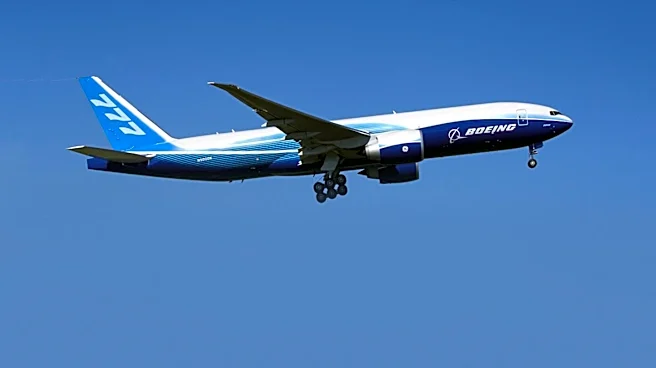
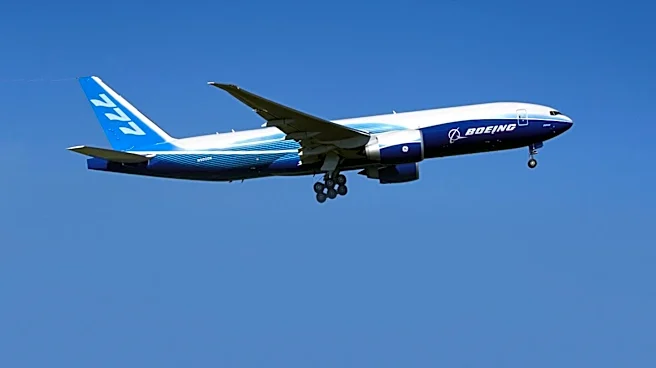
Boeing plans to continue its focus on increasing production rates and completing certification programs for its aircraft. The company expects to certify its 737-7 and 737-10 variants in 2026, with first deliveries anticipated in 2027. Additionally, Boeing's 777X program has received approval to begin certification flight testing, with first deliveries also expected in 2027. These developments indicate Boeing's strategic focus on expanding its product offerings and meeting future market demands, which could further strengthen its market position and financial performance.