

What's Happening?
Yoga Journal editor and certified yoga instructor Calin Van Paris suggests that certain yoga poses can help individuals physically access and embody gratitude, especially when feeling thankful is difficult due to global events or personal struggles. Instead
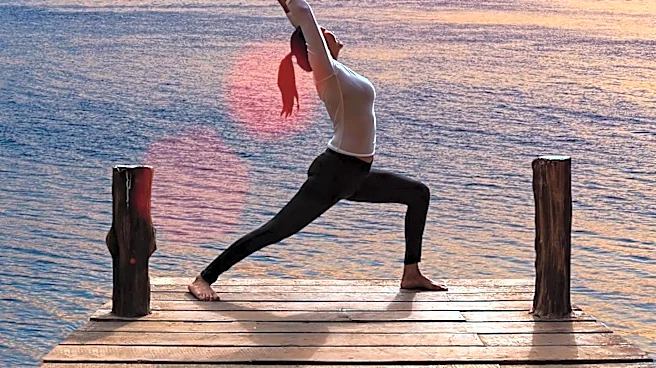
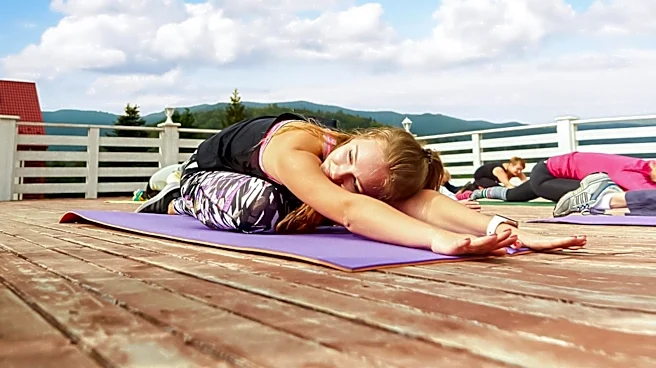
of forcing a mental state of gratitude, the approach focuses on using the body to initiate the feeling. Five specific poses are highlighted: Child’s Pose (Balasana), Squat (Malasana), Upward Salute (Urdhva Hastasana), Camel Pose, and Savasana. Each pose is described as facilitating a physical expression or sensation conducive to gratitude. For instance, Child’s Pose involves bowing, akin to worship, while Squat offers a sense of humility and strength. Upward Salute is presented as a full-body expression of joy, and Camel Pose encourages an open heart. Savasana, or Corpse Pose, is seen as the ultimate surrender and acceptance of the present moment.
Why It's Important?
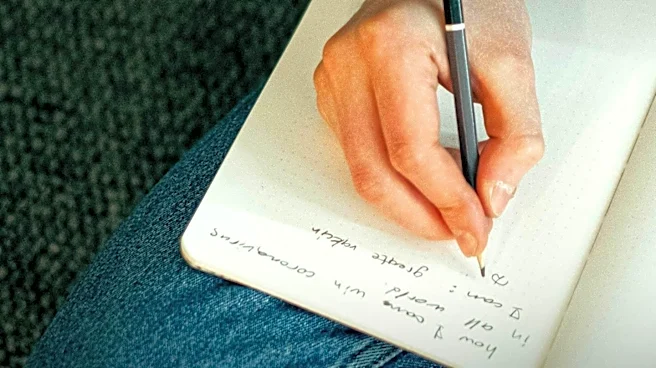
This approach to gratitude, integrating physical practice with emotional well-being, offers a unique and accessible pathway for many Americans to navigate challenging times. In a society where mental health is increasingly prioritized, providing tangible, body-centered methods for emotional regulation can be highly beneficial. For individuals who find traditional gratitude practices, like journaling, less effective or difficult to initiate, yoga offers an alternative that leverages the mind-body connection. This method can help bridge the gap between intellectual understanding of gratitude and its actual emotional experience, making it more attainable for a broader population. By physically embodying thankfulness, individuals may find a deeper, more visceral connection to positive emotions, potentially leading to improved mental resilience and overall well-being, especially during periods of stress or uncertainty.
What's Next?
The integration of specific yoga poses for gratitude could see increased adoption in wellness programs, yoga studios, and mental health practices across the U.S. Yoga instructors might incorporate these themed sequences into their classes, offering guided meditations focused on gratitude within these postures. Mental health professionals could recommend these physical practices as a complementary tool for clients struggling with emotional regulation or seeking alternative ways to cultivate positive emotions. Online platforms and wellness apps may also develop guided sessions centered around these gratitude-inducing poses. This trend could lead to a broader understanding and acceptance of somatic practices as valuable components of emotional and psychological health, expanding the toolkit available for personal well-being.
Beyond the Headlines
The emphasis on physical embodiment of gratitude delves into the deeper philosophical and psychological understanding of the mind-body connection. It challenges the Western tendency to separate mental and physical states, advocating for a more holistic approach to emotional experience. This perspective suggests that emotions are not solely cognitive but are deeply intertwined with bodily sensations and expressions. Ethically, it promotes self-compassion and acceptance, allowing individuals to approach difficult emotions through gentle physical engagement rather than intellectual struggle. Culturally, it could contribute to a greater appreciation for ancient practices like yoga as valuable tools for modern psychological well-being, fostering a more integrated view of health that encompasses physical, mental, and emotional dimensions. This shift could encourage a more mindful and embodied way of living, where individuals are more attuned to their internal states and how they manifest physically.