






What's Happening?
Oracle CEO Mike Sicilia addressed the Boston College Chief Executives Club, discussing the challenges and benefits of the artificial intelligence boom. Sicilia acknowledged that the tech industry, including Oracle, is partly to blame for the public pushback
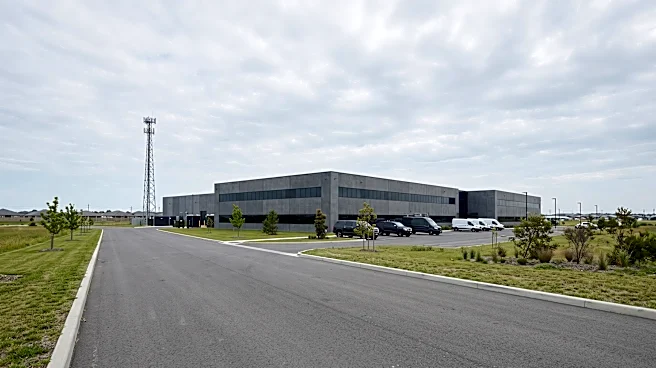
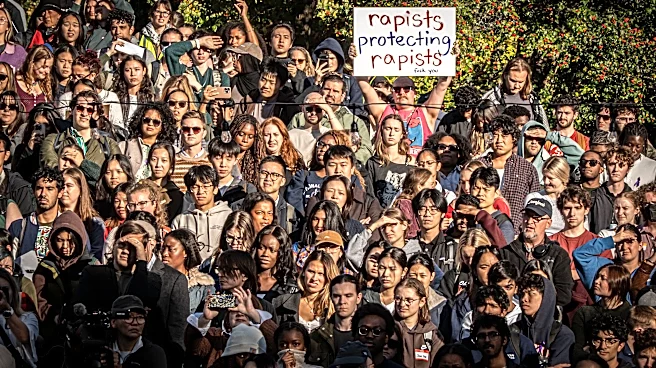
against data centers due to insufficient community engagement. He noted that data centers have become a polarizing issue, with communities expressing concerns about their environmental impact. Sicilia emphasized the need for the tech industry to learn from sectors like banking and healthcare by prioritizing community involvement and becoming trusted local providers. He also touched upon the potential of AI to create more jobs than it displaces in the long run, while expressing concern about the pace of AI development and the time needed for workforce retraining.
Why It's Important?
Oracle CEO Mike Sicilia's remarks highlight critical issues facing the U.S. tech industry, particularly the growing tension between rapid AI development and community concerns. The pushback against data centers, as seen in Massachusetts with Governor Maura Healey's executive order, indicates a rising demand for greater environmental responsibility and local engagement from tech companies. This situation could lead to increased regulatory scrutiny and more stringent requirements for data center construction and operation across the U.S., impacting investment and expansion plans for major tech players. Furthermore, Sicilia's discussion on AI's impact on the job market underscores a national debate about future employment and the need for robust workforce development programs. The industry's ability to address these concerns will be crucial for maintaining public trust and ensuring continued innovation and economic growth.
What's Next?
Following Oracle CEO Mike Sicilia's acknowledgment of the tech industry's shortcomings in community engagement, it is likely that Oracle and other major tech companies will face increased pressure to adopt more proactive and transparent community outreach strategies. This could involve greater investment in local infrastructure, environmental mitigation efforts, and public education campaigns regarding the benefits and safeguards of AI. Policymakers, both at state and federal levels, may also be encouraged to develop clearer guidelines and regulations for data center development and AI deployment, potentially influencing legislative agendas. The ongoing debate about AI's impact on employment will necessitate continued dialogue between industry leaders, educators, and government bodies to develop effective retraining programs and educational initiatives to prepare the workforce for future job market shifts. The industry's response to these challenges will shape its public perception and regulatory environment for years to come.
Beyond the Headlines
The discourse surrounding AI and data centers, as articulated by Oracle CEO Mike Sicilia, reveals deeper societal anxieties about technological advancement and its ethical implications. The public's skepticism, which Sicilia noted as 'mostly opposed' in the 'court of public opinion,' extends beyond environmental concerns to fundamental questions about human agency and the future of work. The idea that AI might need to 'find a cure for cancer' to win over public sentiment highlights the high bar for societal acceptance of transformative technologies. This suggests that mere technological prowess is insufficient; demonstrable, tangible benefits that address profound human challenges are increasingly expected. This ethical dimension will likely drive future innovation, pushing companies to not only develop advanced AI but also to ensure its applications are aligned with broader societal well-being and human values, potentially leading to a more human-centric approach to technological development.