






What's Happening?
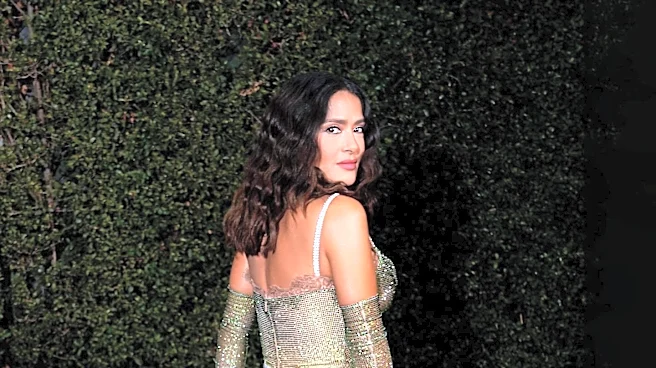
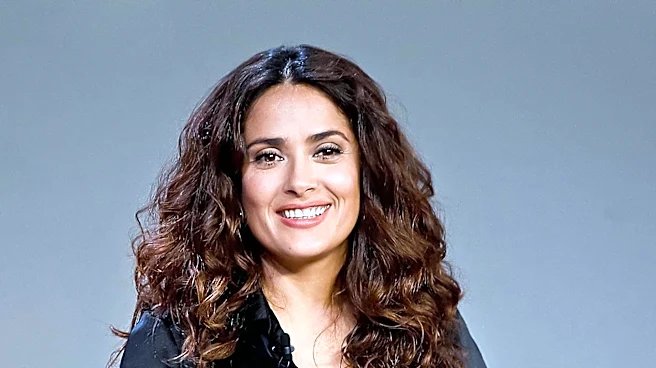
Actress Salma Hayek recently disclosed that Columbia Pictures initially intended to cast Cameron Diaz for the role of Carolina in the 1995 film 'Desperado.' Despite director Robert Rodriguez's preference for Hayek, the studio pushed for Diaz, who had
just gained prominence from her performance in 'The Mask.' Hayek recounted that the studio believed Diaz, due to her surname, could portray a Mexican character. This led to Hayek having to re-audition for the role, competing against other Latina actresses, including Jennifer Lopez. Ultimately, Hayek secured the part, which propelled her to international stardom and led to further collaborations with Rodriguez, such as 'From Dusk Till Dawn.' The revelation highlights the casting dynamics and studio influence prevalent in Hollywood during that era, particularly concerning ethnic representation and emerging talent.
Why It's Important?
This revelation is important as it sheds light on the historical casting practices in Hollywood, particularly regarding ethnic roles and the influence of studio executives. The studio's assumption that Cameron Diaz could play a Mexican character based solely on her surname, despite Hayek being Rodriguez's preferred choice for authentic representation, underscores a broader issue of miscasting and the lack of diverse perspectives in decision-making roles within the film industry. It highlights the challenges faced by Latina actresses like Salma Hayek in securing roles that authentically represent their heritage, even when favored by directors. This incident reflects a period where studios often prioritized marketability and perceived audience appeal over cultural accuracy, impacting the careers of actors and the authenticity of cinematic portrayals. The eventual casting of Hayek, a Latina actress, for the role was a significant step towards better representation, demonstrating the importance of persistent advocacy for diverse talent.
What's Next?
While this specific event occurred decades ago, its implications continue to resonate within the ongoing discussions about diversity and representation in Hollywood. The industry is currently under increased scrutiny to ensure authentic casting and to provide more opportunities for underrepresented groups both in front of and behind the camera. This historical anecdote serves as a reminder of past practices that the industry is actively working to overcome. Future casting decisions are likely to face greater public and critical examination, with a stronger emphasis on cultural sensitivity and genuine representation. The trend suggests a continued push for studios to prioritize diverse talent and narratives, moving away from superficial considerations like surnames for ethnic roles. This ongoing evolution aims to create a more inclusive and equitable film industry.
Beyond the Headlines
Beyond the immediate casting decision, this incident touches upon deeper issues of cultural identity and representation in media. The studio's rationale for considering Cameron Diaz for a Mexican role, based on her surname, exemplifies a superficial understanding of ethnicity and cultural background. This approach can perpetuate stereotypes and dilute authentic cultural narratives. It underscores the importance of having diverse voices in creative and executive positions within the film industry, as they are better equipped to understand and advocate for nuanced and accurate portrayals. The struggle for authentic representation is not merely about casting the 'right' person but about fostering an environment where diverse stories can be told with integrity and respect, challenging preconceived notions and enriching the cultural landscape of cinema.