



What's Happening?
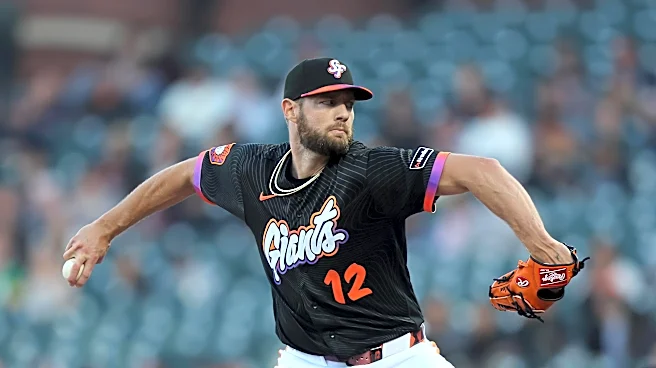
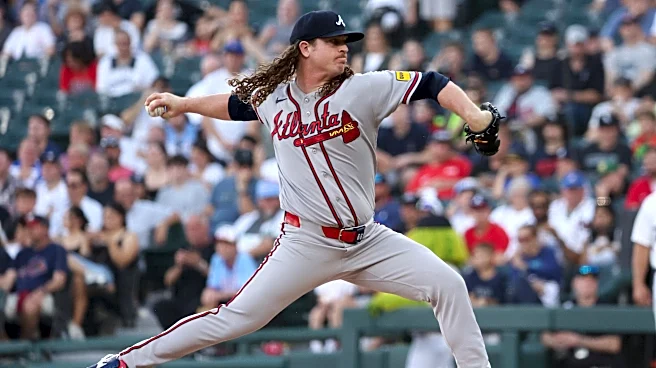
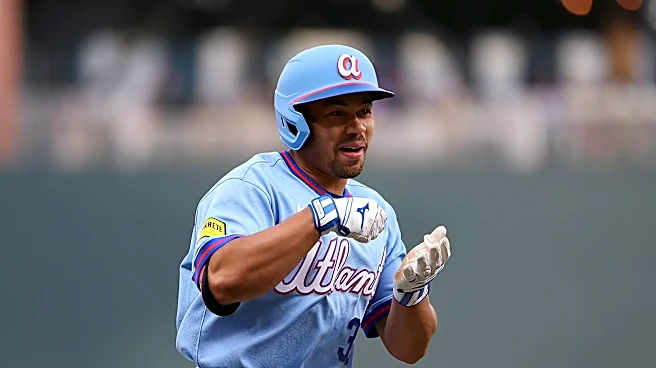
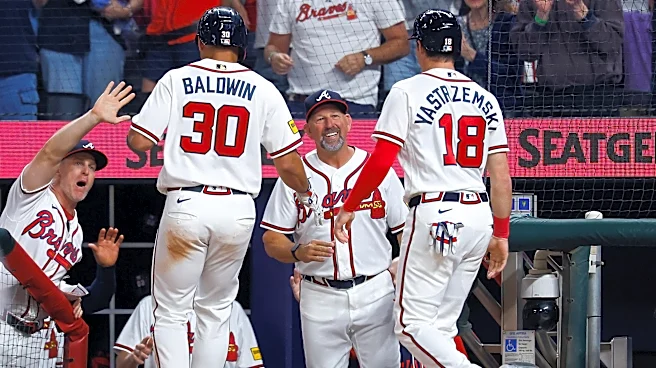
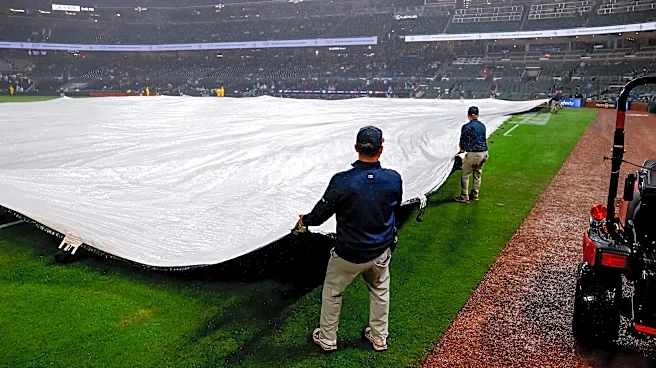
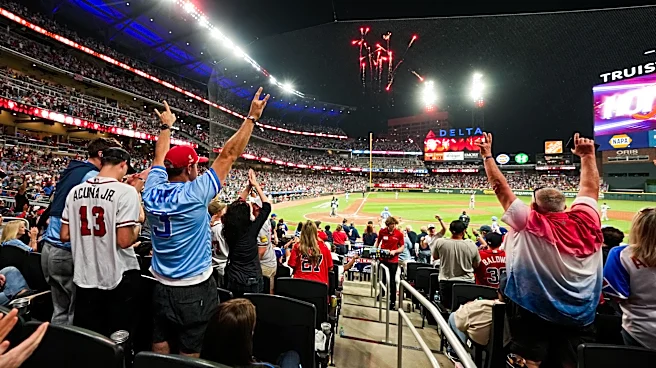
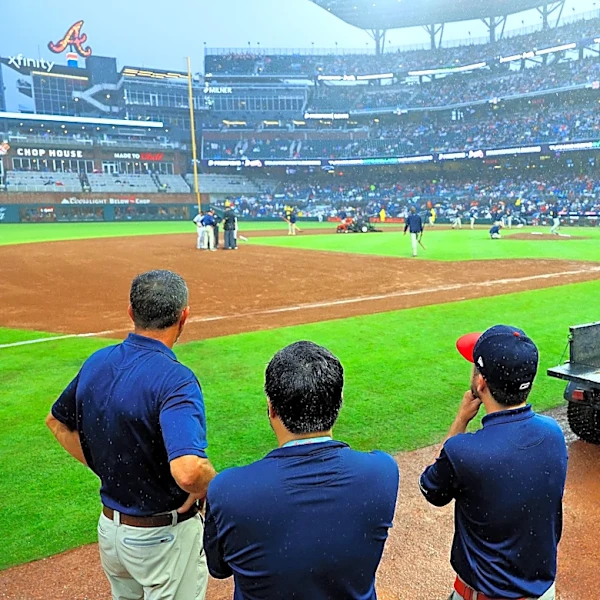
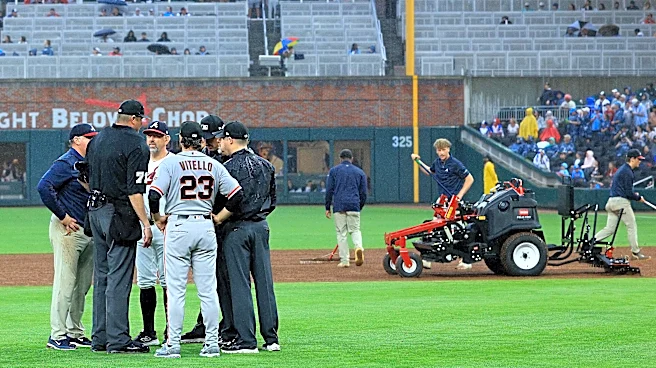
The Atlanta Braves faced criticism for their decision to start a game against the San Francisco Giants despite ongoing rain. The game, held at Truist Park, was marred by poor weather conditions, leading to player safety concerns and performance issues.
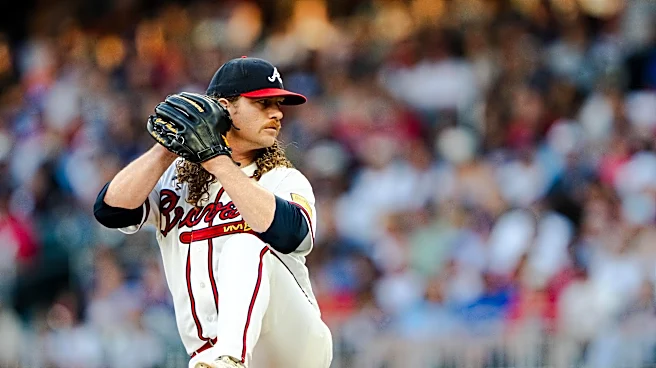
The Braves' management chose to proceed with the game, anticipating the rain would soon stop, but this decision backfired as conditions worsened. Key player Grant Holmes struggled to pitch effectively in the rain, and Michael Harris II left the game with back tightness after a challenging play. The decision to play in such conditions has raised questions about the team's priorities and decision-making processes.
Why It's Important?
The Braves' decision highlights the tension between competitive strategy and player safety in professional sports. By choosing to play in adverse conditions, the team risked player injuries and compromised performance, which could have long-term implications for their season. This incident underscores the importance of prioritizing player welfare over short-term competitive gains. It also raises broader questions about how teams balance the pressures of maintaining a lead in their division with the need to ensure safe playing conditions. The outcome of this decision could influence future policies regarding game delays and cancellations due to weather.
What's Next?
In the aftermath of this decision, the Braves may face scrutiny from fans, media, and league officials. The team will need to assess the impact of their decision on player health and performance, potentially leading to changes in how they handle similar situations in the future. Additionally, the incident could prompt discussions within the league about establishing clearer guidelines for game postponements due to weather. As the season continues, the Braves will need to focus on maintaining their lead in the division while ensuring that player safety remains a top priority.