





What's Happening?
London-based travel goods brand Carl Friedrik has inaugurated its first U.S. flagship store in New York City, located at 458 Broadway in the SoHo district. This new retail space positions the brand alongside other prominent fashion houses such as Maison
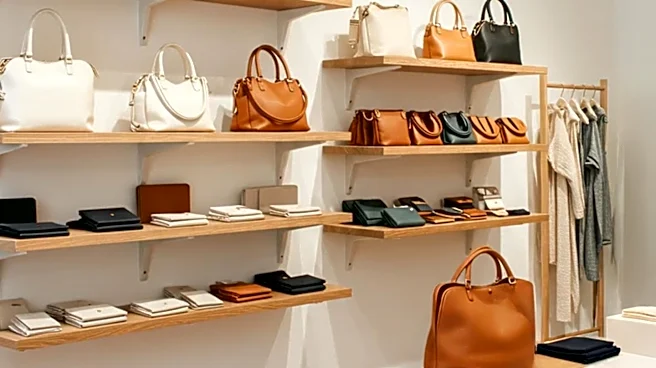
Margiela, Polène, and Toteme. The 1,350-square-foot store was designed by co-founder Niklas Oppermann and executed by U.S. architecture firm Sergio Mannino Studio. The interior design draws inspiration from 1970s Italian modernism and private members' clubs, incorporating materials like stained oak and veined marble within an 1895 building. Original architectural features, including exposed beams and tall windows, have been preserved. The store is divided into an airy front gallery for product display and a darker, club-inspired lounge at the rear, featuring vintage travel objects and a bar cabinet. The flagship opened to the public on November 5, 2026.
Why It's Important?
The opening of Carl Friedrik's first U.S. flagship store in New York signifies a strategic expansion into its largest market, North America. This move is crucial for the brand's growth, as it allows for a direct physical presence in a key global fashion and retail hub. Establishing a brick-and-mortar location enables Carl Friedrik to offer services unavailable through its e-commerce channel, such as customers viewing and handling the full collection, accessing a dedicated embossing station for customising small leather goods, and utilizing repair services. This enhanced customer experience can foster stronger brand loyalty and attract new clientele who prefer in-person shopping. The store's design, blending 1970s Italian modernism with contemporary elements, aims to create a unique and inviting atmosphere, further solidifying the brand's luxury image and market positioning in a competitive retail landscape.
What's Next?
Carl Friedrik's new flagship store is designed to host a program of tailored events, which will likely serve as a platform for community engagement and brand building. These events could include product launches, exclusive previews, or collaborations, further integrating the brand into New York's fashion scene. The success of this flagship in New York will likely inform Carl Friedrik's future expansion strategies in other major global cities, potentially leading to more physical retail locations. The brand's focus on providing unique in-store services, such as customization and repair, could set a precedent for other e-commerce-heavy brands looking to enhance their physical retail offerings. The store's performance will be closely watched as an indicator of the brand's ability to translate online success into a robust offline presence and capture a larger share of the U.S. luxury travel goods market.
Beyond the Headlines
The decision by Carl Friedrik to invest in a physical flagship store in New York, despite the growing dominance of e-commerce, highlights a broader trend in the retail industry: the strategic importance of experiential retail. Brands are increasingly recognizing that physical spaces offer more than just sales points; they serve as brand showcases, community hubs, and opportunities for direct customer interaction that digital channels cannot fully replicate. The store's design, inspired by 1970s Italian modernism, also reflects a desire to create a distinctive brand identity and atmosphere, appealing to consumers who seek unique and aesthetically pleasing shopping environments. This move suggests a nuanced approach to retail, where online and offline channels complement each other, providing a holistic brand experience. It also underscores the enduring appeal of New York City as a premier destination for international brands seeking to establish a strong presence in the U.S. market.