







What's Happening?
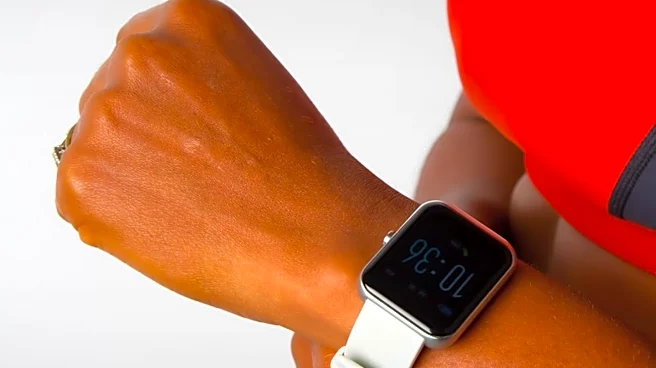
Wearable health technology is advancing with the development of innovative products designed to track various health metrics. A significant development in this field is the creation of a thin wearable patch that generates electricity directly from human
sweat. This patch uses an enzymatic biofuel cell to capture chemical compounds, particularly lactate, released in sweat and convert them into power. This technology allows for continuous power generation without the need for external power sources, enabling the operation of sensors in wearable devices during everyday activities such as walking or exercising. This innovation is part of a broader trend in the wearable tech industry, which is a multi-billion dollar market, focusing on integrating health monitoring with renewable energy solutions.
Why It's Important?
The development of sweat-powered wearable devices represents a significant step forward in the wearable health tech industry. By eliminating the need for bulky batteries, these devices can become more compact and user-friendly, particularly benefiting individuals who require continuous health monitoring. This technology is especially relevant for the elderly or those with chronic health conditions who may not be tech-savvy. Additionally, the integration of renewable energy solutions into wearable technology aligns with global efforts to reduce reliance on traditional power sources, promoting sustainability. The potential for these devices to operate indefinitely without the need for recharging could revolutionize the way health data is collected and utilized, offering new opportunities for healthcare providers and patients alike.
What's Next?
As this technology continues to develop, it is likely that we will see an increase in the adoption of sweat-powered wearable devices in the healthcare industry. Researchers and developers may focus on enhancing the efficiency and reliability of these devices, potentially expanding their applications beyond health monitoring to include other areas such as fitness and wellness. The success of these innovations could also encourage further investment in renewable energy solutions within the tech industry, driving advancements in other sectors. Stakeholders, including healthcare providers, tech companies, and consumers, will need to consider the implications of widespread adoption, including data privacy and the integration of these devices into existing healthcare systems.
Beyond the Headlines
The introduction of sweat-powered wearable devices raises important ethical and cultural considerations. As these devices become more prevalent, issues related to data privacy and security will need to be addressed, particularly concerning the sensitive health information they collect. Additionally, there may be cultural shifts in how individuals perceive and engage with health monitoring technology, as continuous tracking becomes more accessible and integrated into daily life. The long-term impact of these devices on healthcare practices and patient outcomes will be an area of interest for researchers and policymakers, as they navigate the balance between technological innovation and ethical responsibility.