





What's Happening?
The global autonomous farm equipment market is forecast to expand significantly, from an estimated $12.5 billion in 2026 to $37.5 billion by 2036, demonstrating an 11.6% Compound Annual Growth Rate (CAGR). This growth is primarily driven by increasing
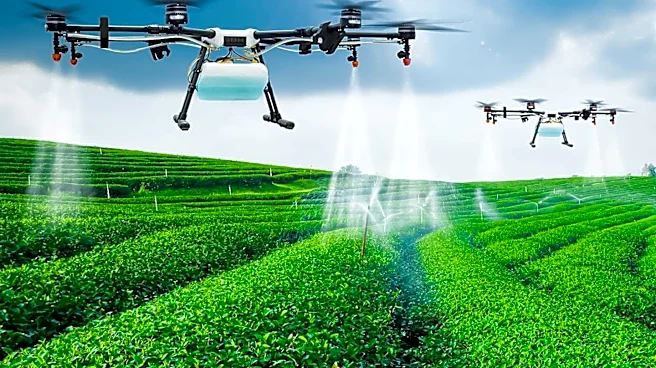
agricultural labor shortages, the expanding adoption of precision farming techniques, and the growing integration of advanced technologies such as artificial intelligence (AI), the Internet of Things (IoT), and robotics. Autonomous machinery, which includes fully and partially autonomous tractors, harvesters, planting systems, sprayers, irrigation equipment, agricultural drones, ground robots, and robotic milking systems, is becoming crucial for agricultural businesses aiming to enhance operational productivity, optimize resource utilization, and reduce reliance on manual labor. While autonomous tractors currently hold the largest market share at 38.4% in 2026, robotic harvesters are projected to be the fastest-growing segment with a 16.4% CAGR, reflecting a rising demand for automated harvesting in labor-intensive crops.
Why It's Important?
This projected growth in the autonomous farm equipment market signifies a major transformation within the agricultural sector, particularly in the U.S. where large-scale agricultural operations and persistent labor shortages are prevalent. The shift towards automation offers a critical solution to rising labor costs and the need to maintain productivity during peak planting and harvesting seasons. For U.S. farmers, adopting these technologies can lead to increased efficiency, reduced operational expenses, and more precise resource management, ultimately boosting profitability and sustainability. Equipment manufacturers and technology providers stand to gain significantly from this trend, with opportunities extending beyond autonomous tractors to include robotic harvesting, agricultural drones, precision spraying, and integrated farm management systems. The U.S. market is expected to grow at a 9.6% CAGR, indicating substantial commercial opportunities for connected equipment and automated field management solutions.
What's Next?
The industry is moving towards integrated equipment ecosystems that combine autonomous machinery with farm management software, telematics, and connected sensors. Agricultural drones are expected to see increased adoption for spraying and monitoring, while robotic harvesting will continue to attract interest for specialty crops. Emerging business models like 'equipment-as-a-service' and retrofit solutions are anticipated to gain traction, offering alternative purchasing options that can reduce the initial investment for medium-sized agricultural businesses. Manufacturers will likely focus on developing these integrated solutions and exploring financing partnerships to address the high equipment prices, which remain a significant barrier to adoption, especially for smaller farms. Regulatory requirements, connectivity limitations, and component availability will also shape the commercialization strategies in the coming years.
Beyond the Headlines
The widespread adoption of autonomous farm equipment could have profound long-term implications for the agricultural workforce and rural economies. While automation addresses labor shortages, it also raises questions about the future of agricultural jobs and the need for new skill sets in operating and maintaining advanced machinery. This technological shift could lead to a more specialized and tech-savvy agricultural workforce, requiring significant investment in training and education. Furthermore, the increasing reliance on AI and IoT in farming could introduce new cybersecurity risks and data privacy concerns, necessitating robust protective measures. The economic viability of these technologies for smaller farms, often operating on tighter margins, will be a critical factor in determining the equitable distribution of benefits across the agricultural landscape, potentially leading to policy discussions around subsidies or shared equipment models.