






What's Happening?
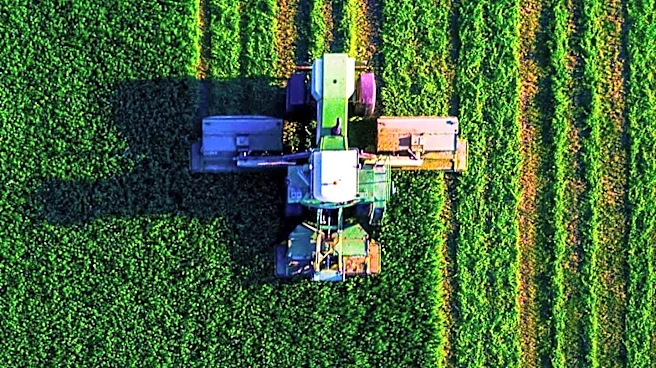
American agriculture is undergoing a significant transformation with the deployment of autonomous vehicle fleets, as highlighted by Autonomous Solutions Inc. (ASI), U.S. Sugar, and Everglades Equipment Group in South Florida. This initiative involves
the largest autonomous vehicle fleet in American sugarcane farming history, operating across hundreds of thousands of acres. The technology aims to address critical challenges faced by farmers, including a shrinking workforce, rising input costs, and unpredictable weather patterns. U.S. Sugar, a major farming and processing company, has integrated ASI's Mobius platform into its John Deere tractors, enabling fully autonomous operations for land preparation and sugarcane cultivation. This is not a pilot program but a full operational deployment already yielding results, such as higher accuracy in land preparation and extended operational hours, irrespective of crew availability or weather variability. The system is designed to be manufacturer-agnostic, allowing integration with existing farm equipment.
Why It's Important?
The adoption of autonomous technology in American agriculture is crucial for ensuring food security and the economic viability of farming operations. Farmers are increasingly struggling with labor shortages, which can severely impact their ability to respond to time-sensitive agricultural needs, such as protecting crops from unexpected weather events like deep freezes. Autonomous fleets provide a critical solution by allowing work to continue around the clock, regardless of human operator availability. This not only mitigates losses due to labor constraints but also enhances efficiency and precision in farming practices. The success of this large-scale deployment in South Florida demonstrates a viable path for other agricultural sectors to overcome similar challenges, potentially safeguarding the nation's food supply from disruptions caused by climate and workforce issues. Furthermore, it signifies a shift in the labor model, where existing employees are retrained for higher-skill supervisory roles, improving working conditions and career longevity for agricultural workers.
What's Next?
The successful deployment of autonomous fleets in South Florida is set to expand significantly. Over the next decade, U.S. Sugar plans to extend autonomous operations across its entire 255,000-acre footprint. The technology, initially focused on land preparation and sugarcane cultivation, is also slated for expansion to other crops, including sweet corn and green beans. This scaling model is replicable across various agricultural environments facing similar operational demands. The broader implications include a continued shift in agricultural labor, with an emphasis on retraining existing personnel for supervisory roles in managing autonomous fleets. Industry events like RoboBusiness 2026 will further explore the design of robotics ecosystems for outdoor autonomy, indicating ongoing innovation and discussion within the sector. This suggests a future where autonomous systems become a standard tool for enhancing resilience and productivity in American farming.
Beyond the Headlines
The integration of autonomous fleets in agriculture represents more than just a technological upgrade; it signifies a fundamental shift in how farming is conducted and perceived. Ethically, the commitment by U.S. Sugar to retain and retrain its workforce addresses concerns about job displacement due to automation, highlighting a model where technology complements human labor rather than replaces it. This approach transforms physically demanding and risky roles into supervisory positions, potentially improving the quality of life for agricultural workers. Legally, the widespread adoption of such technology may necessitate new regulations concerning autonomous vehicle operation in rural and agricultural settings, including safety protocols and liability frameworks. Culturally, it could reshape the image of farming from a traditional, labor-intensive occupation to a high-tech industry, attracting a new generation of workers with advanced technical skills. This long-term shift could ensure the sustainability and competitiveness of American agriculture in a rapidly changing global environment.