





What's Happening?
Manchester United Football Club, a privately held entity founded in 1878, is currently experiencing a significant decline, with fans protesting against the Glazer family's ownership and the club's increasing debt. The club's performance has deteriorated,
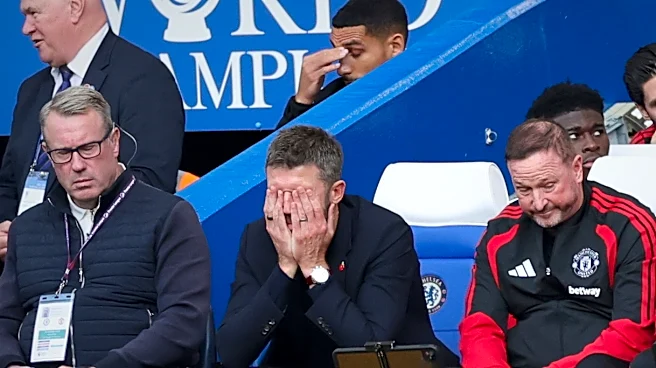
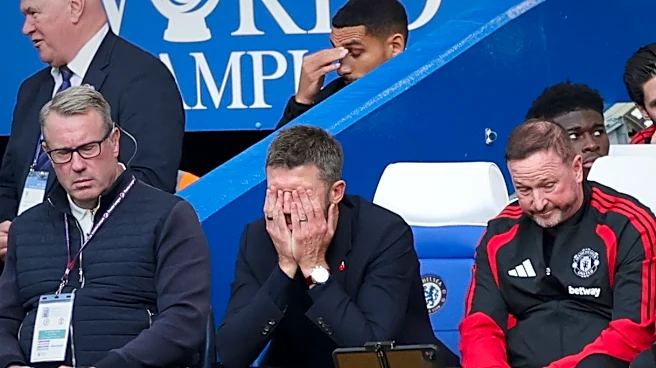
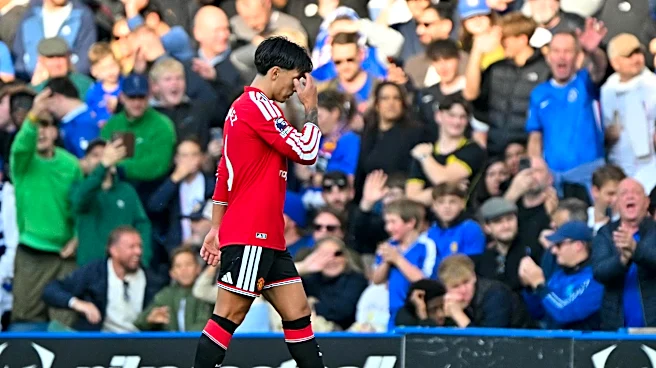
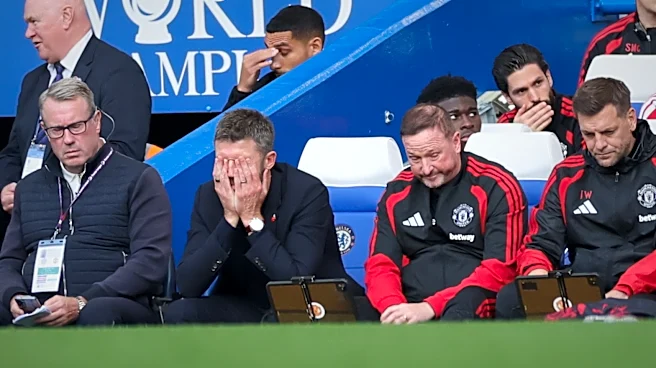
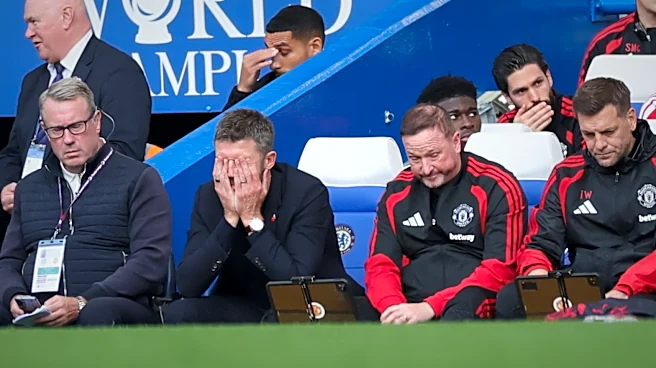
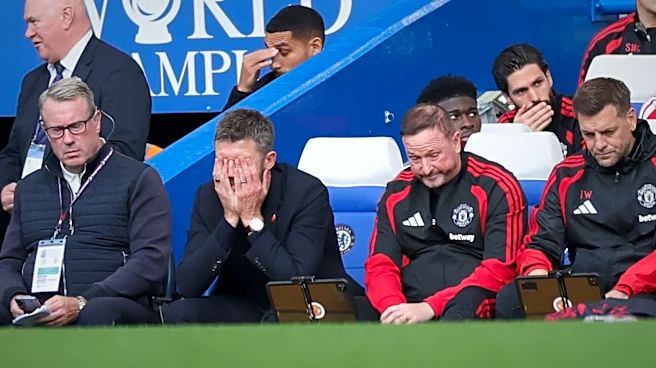
leading to concerns about potential relegation from the English top-flight. Despite winning three successive Premier League titles and the Champions League between 2006 and 2009, the club's debt increased to £716 million under the Glazers. Recent results, including a 2-0 defeat against Chelsea and a 4-1 loss to Como in the Champions League, highlight defensive issues and a lack of cohesion. The club has won only one of its opening nine league games in the 2026-27 campaign, placing them just above the relegation zone on goal difference. This downturn is attributed to years of mismanagement across all levels of the club, including a high turnover of managers and poor recruitment decisions.
Why It's Important?
The struggles of Manchester United, a globally recognized sports brand, have significant implications beyond the pitch. The club's financial woes, including a debt exceeding £1 billion and the Glazer family reportedly pocketing around £22 million per season in dividends since 2015, raise questions about the sustainability of leveraged buyouts in professional sports. The ongoing fan protests and the potential for relegation could severely impact the club's commercial revenue, sponsorship deals, and global brand value. This situation also highlights the tension between financial interests of ownership and the sporting success and fan sentiment, a dynamic often seen in major sports franchises. The club's inability to attract and retain top managerial talent and make effective player acquisitions further underscores the challenges faced when financial priorities overshadow footballing strategy.
What's Next?
Another managerial change is anticipated, with current manager Michael Carrick's future uncertain. Publicly, the club supports Carrick, but behind the scenes, alternatives are being considered, with Unai Emery, Eddie Howe, and Julian Nagelsmann among the admired options. The upcoming November international break is seen as a likely period for a change. The club faces crucial matches against Roma in the Champions League and Aston Villa in the Premier League, which could influence the timing of any decision. The Glazer family's announcement of a strategic review in November 2022, which led to Sir Jim Ratcliffe's INEOS acquiring a minority 27% stake and taking over day-to-day football operations, has not yet yielded positive results. Fans are pressuring both the Glazers and Ratcliffe for a full sale of the club, with protests continuing.
Beyond the Headlines
The deep-seated issues at Manchester United extend beyond immediate results, touching upon ethical and cultural dimensions of sports ownership. The Glazer family's ownership, characterized by significant debt loading onto the club and limited direct engagement with fans, has fostered a sense of alienation among the supporter base. The club's commercial-first approach, as evidenced by past executive decisions prioritizing marketability over footballing needs and handing out massive contracts to underperforming players, has eroded its sporting integrity. The ongoing debate about a new 100,000-seat stadium, with unclear funding plans, further exacerbates fan frustration, who view it as another example of owners failing to understand the club's core values. This situation reflects a broader trend in modern football where traditional club identities are challenged by global business models, leading to a disconnect between ownership and the passionate fan base.