



What's Happening?
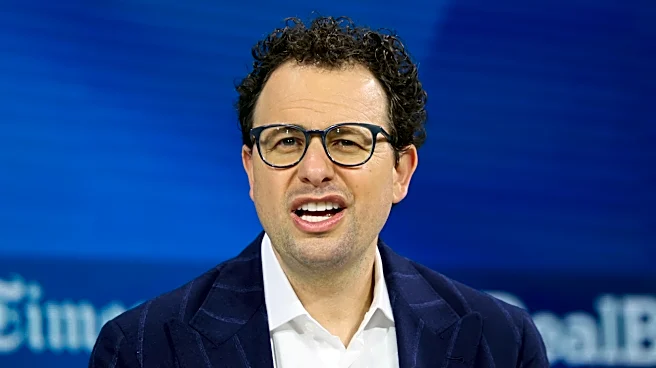
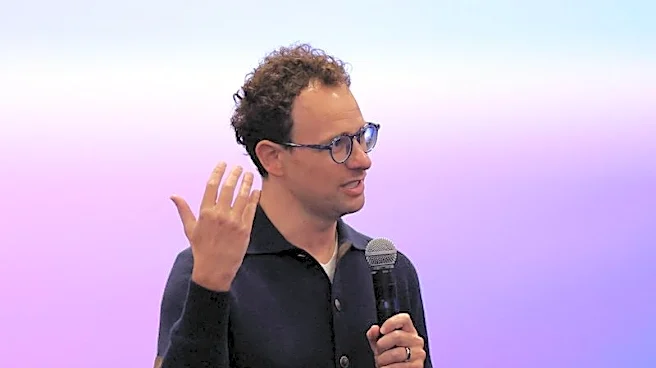
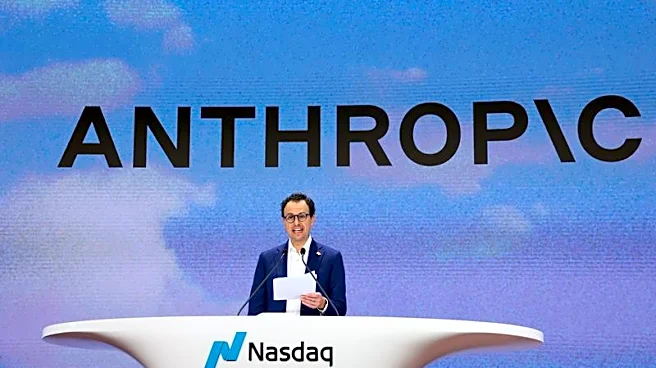
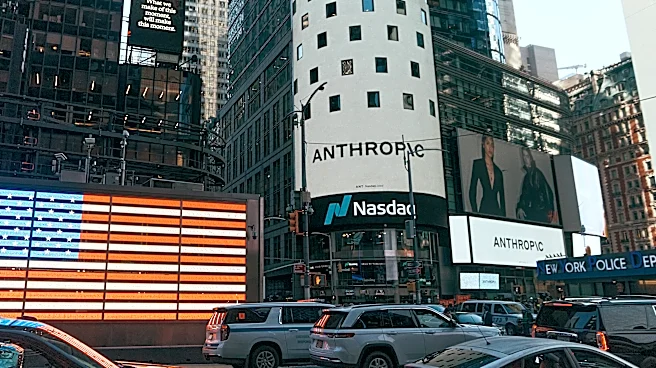
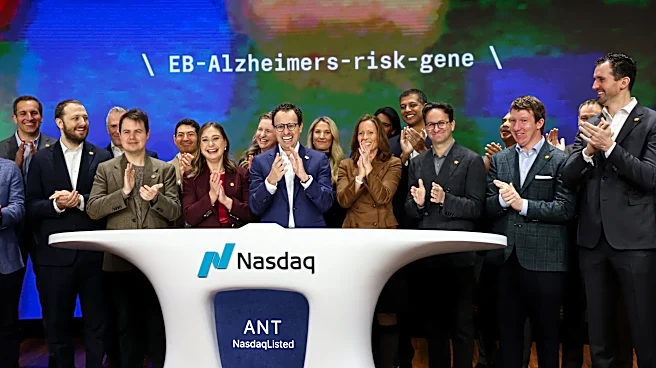
Chris Olah, co-founder of the artificial intelligence company Anthropic, has become a billionaire following the company's initial public offering (IPO). At 34 years old, Olah's stake in Anthropic is now estimated at $23 billion (21 billion euros) by Forbes
magazine. Olah, who dropped out of college and has no formal degree, is responsible for 'interpretability' within Anthropic, focusing on understanding the internal workings and decision-making processes of AI models like Claude. His role involves dissecting how these models use data to generate responses, essentially exploring the 'black box' of AI. Olah previously worked at Google, where he contributed to the DeepDream project, and later at OpenAI before co-founding Anthropic in 2021 with Dario Amodei and other former OpenAI colleagues. He has also engaged with religious authorities, including Pope Leo XIV, to discuss the ethical framing of AI development.
Why It's Important?
Olah's rise to billionaire status underscores the immense financial growth and investment in the artificial intelligence sector, particularly in companies like Anthropic that are at the forefront of AI development. His focus on 'interpretability' is crucial for the future of AI, as understanding how these complex systems arrive at their conclusions is vital for ensuring their safety, reliability, and ethical deployment. This work directly addresses concerns about AI transparency and accountability, which are increasingly important as AI integrates into critical sectors. The engagement with moral and religious authorities, such as Pope Leo XIV, highlights a growing recognition within the tech industry of the need for broader societal input on AI's ethical implications. This interdisciplinary dialogue is essential for establishing a robust framework for AI governance that considers not only technological advancements but also human values and societal well-being.
What's Next?
The continued focus on AI interpretability by figures like Chris Olah suggests a future where transparency and explainability will be paramount in AI development. As Anthropic and other AI companies continue to innovate, the demand for clear, understandable AI systems will likely increase, driven by regulatory pressures and public scrutiny. Olah's engagement with ethical and religious leaders indicates a potential trend towards more collaborative efforts between tech innovators and various societal stakeholders to shape AI's future. This could lead to the development of new ethical guidelines, industry standards, and potentially even international accords on AI development and deployment. The financial success of Anthropic's IPO will also likely fuel further investment in AI research and development, potentially accelerating the pace of innovation while also intensifying the debate around responsible AI practices.
Beyond the Headlines
Olah's journey, from college dropout to AI billionaire and a leading voice in AI interpretability, challenges traditional notions of academic credentials in the tech industry. His emphasis on understanding the 'black box' of AI touches upon profound philosophical questions about consciousness and intelligence, as evidenced by his remarks to Pope Leo XIV about AI models exhibiting 'introspection' and internal states akin to human emotions. This perspective suggests that AI development is not merely a technical endeavor but one that increasingly intersects with psychology, ethics, and even theology. The call for moral voices to guide AI development, free from commercial or geopolitical pressures, highlights a growing concern about the potential for AI to be misused or to develop in ways that are misaligned with human values. This deeper implication points to a future where the ethical and philosophical dimensions of AI will become as critical as its technological capabilities.