





What's Happening?
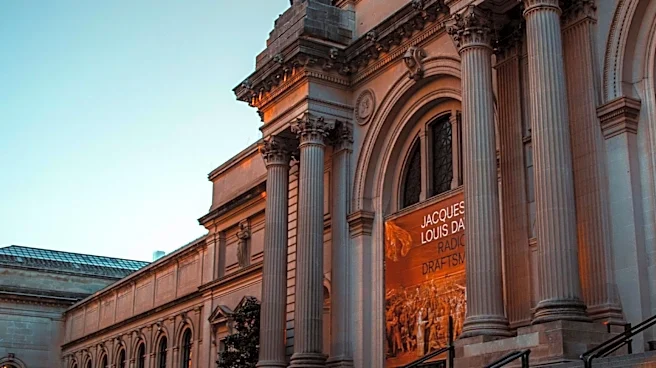
The Metropolitan Museum of Art and fashion designer John Galliano have jointly announced the postponement of the Spring 2027 Costume Institute exhibition, "John Galliano: Horizons." This exhibition was intended to showcase Galliano's four-decade career,
featuring garments, accessories, sketches, and archival materials from his time at Central Saint Martins, Givenchy, Dior, and Maison Margiela. The announcement of the exhibition on July 31, 2026, had elicited mixed reactions. While the fashion community largely expressed excitement for a retrospective on a designer whose work is widely admired, local political and civic leaders raised concerns. Galliano himself stated that he decided to postpone the exhibition after much reflection and discussion with The Met, acknowledging the pain caused by his past words, particularly to the Jewish and Asian communities. He emphasized that meaningful atonement is an ongoing responsibility, not achieved through a single public gesture or institutional recognition.
Why It's Important?
This postponement highlights the ongoing tension between artistic recognition and accountability for past controversies, particularly within the U.S. cultural landscape. The Metropolitan Museum of Art, a prominent American institution, faced a dilemma in honoring a designer with significant artistic contributions while also addressing public concerns regarding his past antisemitic remarks. The decision reflects a growing societal expectation for institutions to consider the ethical implications and broader social impact of their programming. For the fashion industry, it underscores the complexities of celebrating creative genius when personal conduct has caused widespread offense. The situation also demonstrates the influence of public and civic leaders in shaping cultural narratives and institutional decisions, even for events planned years in advance. This event could set a precedent for how major U.S. cultural institutions approach exhibitions involving figures with controversial pasts, potentially leading to more rigorous vetting processes or increased dialogue with affected communities.
What's Next?
The Metropolitan Museum of Art will announce a new Spring Costume Institute exhibition and the date for the 2027 Met Gala at a later time. John Galliano has indicated that his decision is rooted in a continued commitment to atonement, which he views as an ongoing process of listening, learning, and demonstrating responsible conduct over time. This suggests that any future consideration of an exhibition dedicated to his work would likely depend on sustained efforts to address the harm caused by his past actions and a demonstrable shift in public perception. The fashion community and the public will be watching to see how The Met navigates its future programming, particularly regarding designers whose legacies are intertwined with controversy. This situation may also prompt other cultural institutions to re-evaluate their criteria for honoring individuals, potentially leading to more comprehensive assessments of both artistic merit and ethical standing.
Beyond the Headlines
The postponement of Galliano's exhibition delves into deeper questions about cancel culture, redemption, and the role of art institutions in society. It raises the ethical dilemma of whether artistic genius can be separated from personal failings, especially when those failings involve hate speech. The decision to postpone, rather than cancel outright, suggests a nuanced approach, leaving open the possibility of future recognition if Galliano's ongoing efforts at atonement are deemed sufficient. This situation also reflects a broader cultural shift in the U.S., where public figures and institutions are increasingly held accountable for their past actions, and where the impact on marginalized communities is given greater weight. It challenges the notion that artistic achievement alone can insulate individuals from the consequences of their behavior, prompting a re-evaluation of what constitutes a 'worthy' subject for celebration in major cultural institutions. The incident highlights the evolving standards of public morality and the complex interplay between art, ethics, and social responsibility.