






What's Happening?
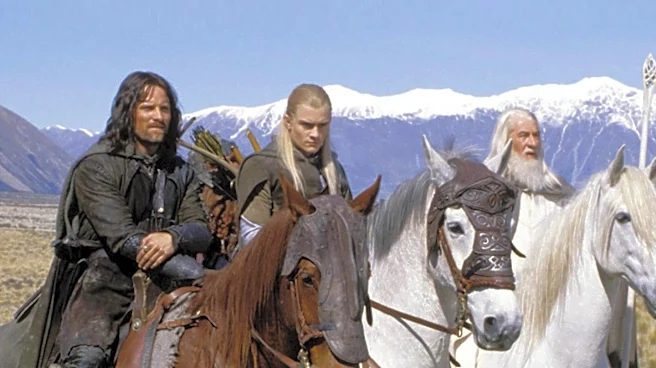
Peter Jackson's film trilogy of 'The Lord of the Rings' follows the central narrative of J.R.R. Tolkien's novel, detailing Frodo Baggins' quest to destroy the One Ring and the Fellowship's struggle against Sauron. However, the film adaptations introduce
significant changes from the original book. Notable omissions include the character of Tom Bombadil and the 'Scouring of the Shire,' a crucial event where the hobbits return to liberate their home from tyranny. Additionally, character arcs for figures like Aragorn and Faramir are altered, with Aragorn portrayed as more reluctant to embrace kingship and Faramir initially considering using the Ring for Gondor's defense, a departure from his book counterpart. The timeline of events is also compressed, and certain scenes, such as Saruman's death and the role of the Army of the Dead, are recontextualized or moved to different parts of the narrative. These changes, while creating memorable cinematic moments, also remove elements that contribute to the novel's complexity and thematic depth.
Why It's Important?
The alterations in Peter Jackson's 'Lord of the Rings' films highlight the inherent challenges and artistic choices involved in adapting a beloved literary work for the screen. The omission of characters like Tom Bombadil and events such as the 'Scouring of the Shire' significantly impacts the thematic resonance of the story. Tom Bombadil's unexplained nature and immunity to the Ring's power in the book introduce a sense of mystery and suggest forces beyond the immediate conflict with Sauron, which is lost in the films. The 'Scouring of the Shire' in the novel provides a final test for the hobbits, demonstrating their growth and the necessity of protecting their home using what they learned abroad, a theme largely absent in the cinematic version. These changes affect how audiences perceive the characters' development, the nature of heroism, and the ultimate cost of victory, offering a more direct narrative in the films at the expense of some of the novel's nuanced explorations of power, corruption, and the return to a changed home.
What's Next?
The ongoing discussion surrounding the differences between Tolkien's 'The Lord of the Rings' novel and Peter Jackson's film adaptations is likely to continue as new generations discover both versions. Future adaptations of Tolkien's work, whether in film, television, or other media, will inevitably face similar decisions regarding fidelity to the source material versus cinematic interpretation. The success and critical acclaim of Jackson's trilogy have set a high bar, but also established a precedent for creative liberties. This ongoing dialogue will continue to shape how audiences and critics evaluate adaptations, emphasizing the importance of understanding the original text while appreciating the distinct artistic vision of a new interpretation. The debate also encourages readers to engage with the novel to discover the richness and depth that the films, by necessity, had to streamline.
Beyond the Headlines
The divergence between Tolkien's novel and Jackson's films extends beyond plot points, touching upon deeper philosophical and thematic implications. Tolkien's work often explores themes of industrialization's impact on nature, the corrupting influence of power, and the quiet heroism of ordinary individuals. The 'Scouring of the Shire,' for instance, serves as a powerful allegory for post-war recovery and the idea that even after a grand victory, the fight for one's home continues. By omitting this, the films simplify the narrative of homecoming and the lingering effects of conflict. Similarly, the portrayal of characters like Aragorn and Faramir in the book emphasizes different aspects of leadership and moral fortitude. The films' choices, while making the story more accessible and dramatic for a wider audience, subtly shift the emphasis from Tolkien's more complex explorations of good and evil, free will, and the nature of true strength, prompting reflection on how different mediums convey profound ideas.