



What's Happening?
The Taliban's provincial Department of Information and Culture in Kandahar has ordered local radio stations to cease all broadcasts related to cricket, Afghanistan's most popular sport. This ban includes commentary, news coverage, and even reports of match
results. Three chief editors and managers of private radio stations in Kandahar confirmed receiving these verbal instructions. An official from Afghanistan's Cricket Board, speaking anonymously, acknowledged the development but stated that the restrictions are currently limited to Kandahar province and that discussions are underway with provincial authorities. Cricket gained significant popularity in Afghanistan after the U.S.-led coalition toppled the Taliban in 2001, leading to the country becoming an associate member of the International Cricket Council. Afghanistan achieved full ICC membership in 2017 and has since become a test-playing nation. The national team has primarily trained and played abroad since the Taliban's return to power in 2021, gaining international recognition, particularly after defeating former champions Pakistan, England, and Sri Lanka in the 2023 Cricket World Cup.
Why It's Important?
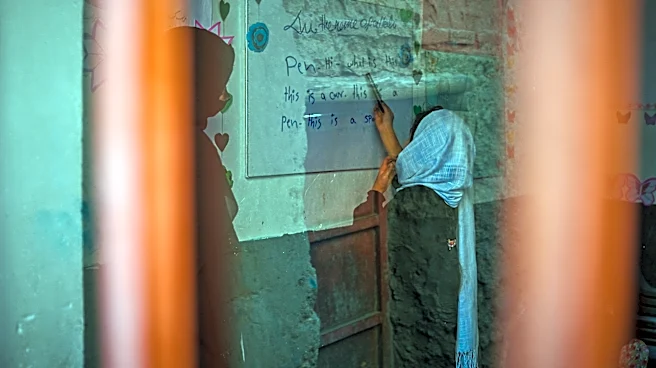
This ban on cricket broadcasts in Kandahar represents a significant cultural restriction imposed by the Taliban, directly impacting a sport that holds immense popularity, especially among Afghan youth. Cricket has served as a unifying force and a source of national pride for many Afghans, with the national team's recent successes bringing widespread admiration. The restriction could further isolate the population in Kandahar from a major form of entertainment and national identity. It also highlights the Taliban's continued imposition of strict social controls, which have previously included limitations on women's access to education, employment, sports, and public life. Such actions contribute to the international community's reluctance to formally recognize the Taliban government, leading to potential boycotts of bilateral cricket competitions with Afghanistan, further hindering the sport's development and the country's international engagement.
What's Next?
The Afghanistan Cricket Board is currently in discussions with provincial authorities in Kandahar regarding the ban, suggesting a potential for negotiation or clarification of the directive. The outcome of these discussions will determine if the ban remains localized or if it could be expanded to other provinces. The international cricket community and human rights organizations will likely monitor the situation closely, as such restrictions could influence future decisions regarding Afghanistan's participation in international cricket events. If the ban persists or expands, it could lead to further isolation of Afghan cricket and potentially impact the morale and development of players within the country. The Taliban's broader policies on social and cultural activities will continue to be a point of contention with the international community, influencing diplomatic relations and aid efforts.
Beyond the Headlines
The ban on cricket broadcasts, while seemingly a localized sports issue, reflects a broader pattern of the Taliban's governance that seeks to control public life and information. This move could be interpreted as an attempt to redirect public attention or to enforce a particular cultural narrative within Kandahar, a region considered the Taliban's southern heartland. The decision to target cricket, a sport that flourished during the post-2001 era, might also symbolize a rejection of cultural influences perceived as foreign or contrary to their ideology. The long-term implications could include a decline in public engagement with sports, a further shrinking of public spaces for entertainment and information, and an exacerbation of feelings of isolation among the populace. This action underscores the ongoing tension between traditional cultural practices and the Taliban's interpretation of Islamic law, impacting the daily lives of ordinary Afghans.