



What's Happening?
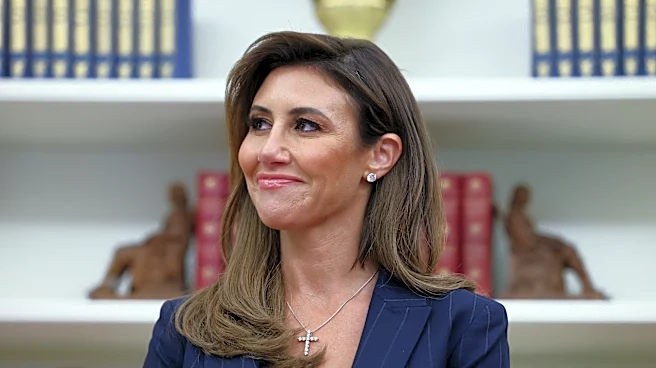
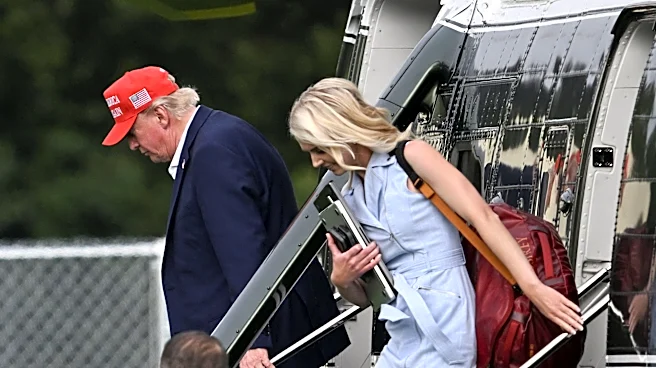
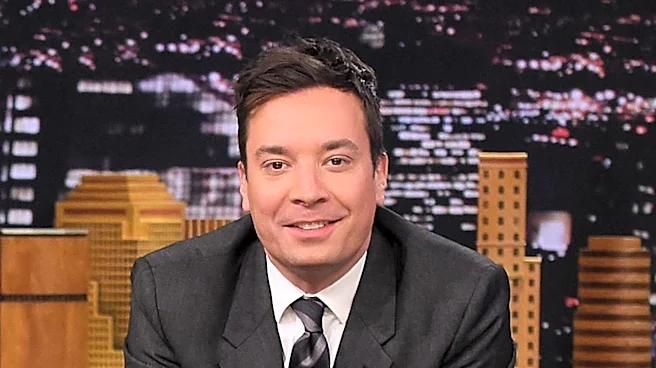
Jimmy Fallon, host of 'The Tonight Show,' parodied Natalie Harp, President Trump's executive assistant, in a sketch that highlighted her reported extreme devotion to the President. The skit featured a doppelganger of Harp humorously crammed into the back
of a truck, referencing a recent report where Harp allegedly rode in the trunk of an SUV to stay with President Trump's motorcade. Fallon's segment also alluded to the recently published letters from Harp to President Trump, which revealed her intense personal feelings, including statements like, 'You are all that matters to me.' The sketch underscored the widespread media attention on Harp's close relationship with President Trump, her $150,000 annual salary, and concerns raised by various officials, including the Secret Service, about her lack of security clearance.
Why It's Important?
The parody by Jimmy Fallon on a major late-night show signifies that the story of Natalie Harp's relationship with President Trump has permeated mainstream popular culture, moving beyond political news cycles. This comedic treatment, while lighthearted, serves to amplify public awareness and discussion about the unusual dynamics within the Trump administration. It reflects a broader societal commentary on the nature of political loyalty and the blurring of professional and personal boundaries in high-stakes government roles. The fact that a late-night host is satirizing the situation indicates that the concerns about Harp's influence and lack of security clearance are resonating with a wider audience, potentially shaping public opinion and adding pressure for greater transparency and adherence to protocol within the White House.
What's Next?
The continued public and comedic attention on Natalie Harp's role may further intensify scrutiny from both the media and political observers. While a late-night parody is not a direct call to action, it contributes to the ongoing narrative that could prompt more serious inquiries or internal reviews within the White House regarding staff conduct and security protocols. The sketch might also encourage more public discourse on the ethical implications of such close personal relationships in government. It is unlikely that the parody itself will lead to immediate policy changes, but it reinforces the public's perception of the situation and could indirectly influence future discussions about presidential staffing and accountability.
Beyond the Headlines
The use of satire in late-night television to address political figures and their relationships, as seen with the Natalie Harp parody, highlights the role of comedy as a form of social and political commentary. Such sketches often serve to demystify powerful figures and situations, making complex or controversial topics more accessible and digestible for a broad audience. In this instance, Fallon's parody taps into the underlying anxieties about unchecked power, personal influence, and the potential for cults of personality in politics. It also implicitly questions the standards of professionalism and security within the highest levels of government, using humor to draw attention to issues that might otherwise be dismissed as mere political gossip. This cultural response reflects a broader societal need to process and critique political events through various lenses, including the comedic.