






What's Happening?
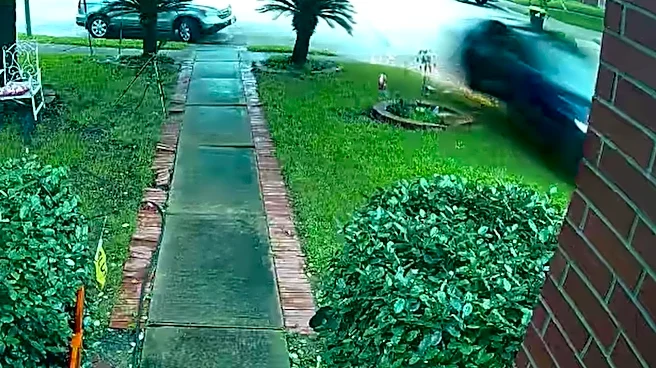
Federal safety investigators have concluded that Tesla's self-driving feature was not responsible for a fatal crash in Katy, Texas, where a Tesla Model 3 killed a 76-year-old woman. The National Transportation Safety Board (NTSB) found that the driver
had overridden the self-driving software by pressing the accelerator to full speed, causing the vehicle to crash into a home. This incident has drawn significant attention as Tesla CEO Elon Musk continues to promote the safety of Tesla's self-driving technology. The crash occurred amid ongoing investigations by the National Highway Traffic Safety Administration (NHTSA) into Tesla's self-driving features, which have been involved in multiple crashes.
Why It's Important?
The findings from the NTSB are crucial as they come at a time when Tesla is under scrutiny for its self-driving technology. The outcome of this investigation could influence public perception and regulatory actions regarding autonomous vehicle technology. Tesla's self-driving feature, marketed as Full Self-Driving (Supervised), has been controversial, with critics arguing that the name is misleading. The NHTSA's ongoing investigations could lead to recalls or stricter regulations, impacting Tesla's operations and the broader autonomous vehicle industry. The case highlights the challenges of ensuring safety in self-driving technology and the importance of clear communication about its capabilities and limitations.
What's Next?
The NHTSA continues to investigate Tesla's self-driving technology, with potential outcomes including recalls or new safety regulations. Tesla may need to address public and regulatory concerns to maintain consumer trust and market position. The company is also preparing to release new autonomous vehicle models, which could be affected by the findings of these investigations. Stakeholders, including regulators, consumers, and competitors, will be closely watching the developments in this case.