





What's Happening?
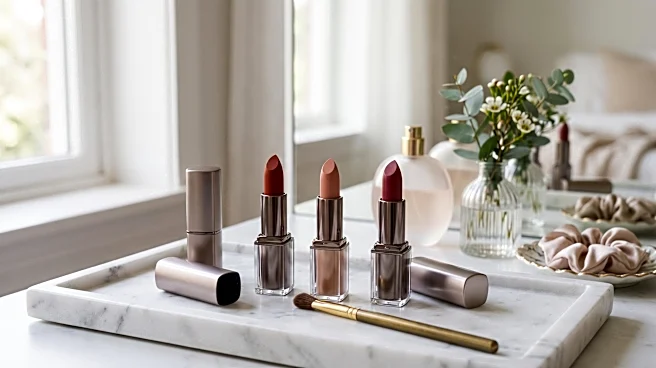
Consumer Reports (CR) recently tested 24 popular lipstick brands for lead content, including top sellers, 'clean' and 'natural' marketed products, and brands from online marketplaces. The results indicated that all tested lipsticks had lead levels below
the FDA's recommended limits, with most containing only trace amounts. However, some products showed comparatively higher, though still low, levels. Notably, a lipstick sold on Temu for under $3 had the highest lead level among those tested. Following CR's contact, Temu removed the product from its platform. Price did not correlate with lead levels; for instance, a $6 E.L.F. lipstick had the lowest levels, while a $44 Estée Lauder lipstick had comparatively higher amounts. Manufacturers, including Estée Lauder, Coty (owner of CoverGirl, Gucci Beauty, Kylie Cosmetics), Dior, Fenty Beauty, Revlon, Shein, and Ilia Beauty, responded to CR, stating that lead and other heavy metals are not intentionally added and occur naturally in mineral-based ingredients. They emphasized that the detected levels are well within permissible international and U.S. regulations, though CR noted that U.S. regulations are few and considered too permissive by some advocates.
Why It's Important?
This report is significant for U.S. consumers as it sheds light on the presence of lead in commonly used cosmetic products, specifically lipsticks, which can be partially ingested. While the lead levels found were generally low and within current FDA guidelines, the findings raise awareness about potential exposure to heavy metals in everyday beauty products. The removal of a product by Temu following CR's investigation highlights the influence of consumer advocacy and independent testing on product safety standards and retailer accountability. The varying responses from cosmetic companies underscore the industry's stance that trace amounts of naturally occurring elements are unavoidable and safe, contrasting with advocates' concerns about the permissiveness of existing U.S. regulations. This situation could prompt consumers to be more discerning about product ingredients and 'clean' labeling, which CR notes is not a regulated term, and may encourage further scrutiny of cosmetic safety standards in the U.S.
What's Next?
Following Consumer Reports' findings, consumers may become more vigilant about the ingredients in their lipsticks and other cosmetics, potentially leading to increased demand for greater transparency from beauty brands. Retailers, especially online marketplaces like Temu, might face pressure to enhance their product vetting processes and safety monitoring for items sold on their platforms. The Personal Care Products Council, representing many cosmetic companies, has reiterated that products are extensively tested and deemed safe, but ongoing discussions about the adequacy of U.S. regulations for heavy metals in cosmetics are likely to continue. Advocacy groups may leverage these findings to push for stricter regulatory limits on contaminants in cosmetics, similar to Washington state's pending threshold of 1 ppm for lead. Consumers are advised by CR to stick with established brands, be skeptical of unregulated 'clean' claims, and consider reapplying lipstick less often.
Beyond the Headlines
The Consumer Reports investigation into lead in lipsticks touches upon broader issues within the U.S. beauty industry, particularly the debate surrounding product safety regulations and the efficacy of 'clean' beauty marketing. The fact that lead, a known neurotoxin, is present even in trace amounts in products applied directly to the lips raises ethical questions about consumer exposure, especially given the lack of stringent U.S. regulations compared to other countries. This situation highlights a potential gap in consumer protection, where the burden of identifying safe products often falls on independent organizations and consumers themselves. The industry's reliance on the argument that trace amounts are 'technically unavoidable' due to natural mineral ingredients also prompts a deeper look into sourcing and manufacturing processes. This could catalyze a shift towards more rigorous ingredient screening and potentially influence future regulatory frameworks, pushing for a re-evaluation of what constitutes 'safe' in cosmetic formulations and how 'clean' labels are defined and enforced.