


What's Happening?
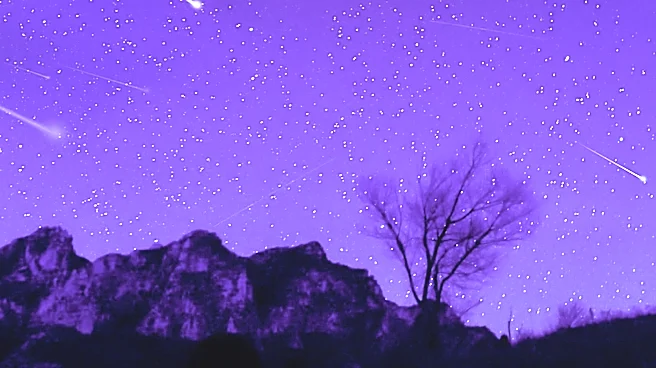
Two meteor showers, the Southern Delta Aquariids and the Alpha Capricornids, are set to peak overnight on July 30-31. However, skywatchers may face challenges due to the bright moonlight from a nearly full moon, which will obscure many of the fainter
meteors. The Southern Delta Aquariids, active from July 12 to August 23, typically produce about 25 meteors per hour under ideal conditions. The Alpha Capricornids, active from July 3 to August 15, are known for their bright fireballs but offer fewer meteors per hour. Observers are advised to watch between midnight and dawn, with the best views in the southern U.S., Mexico, and the Caribbean.
Why It's Important?
The overlapping peaks of these meteor showers provide a unique opportunity for skywatchers, despite the challenging viewing conditions. Meteor showers are popular events that engage the public in astronomy and can inspire interest in space science. The bright moonlight, while a hindrance, also offers a chance for photographers to capture unique images of the night sky. This event underscores the importance of understanding celestial phenomena and their impact on observational astronomy.
What's Next?
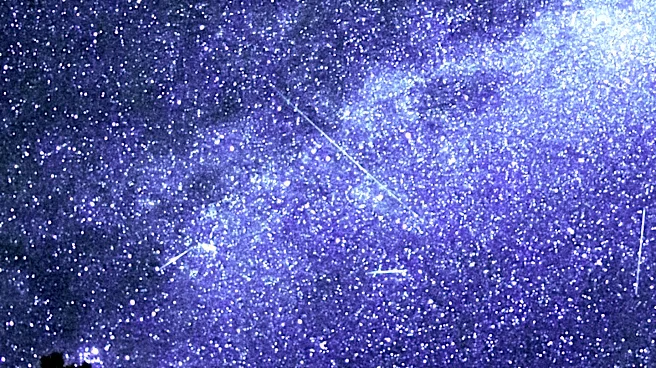
For those unable to view the meteor showers due to the moonlight, the Perseid meteor shower in August offers a promising alternative. The Perseids are expected to peak on August 12-13, coinciding with a new moon, which will provide dark skies ideal for viewing. This upcoming event is anticipated to be one of the year's highlights for skywatchers, with a peak rate of 100 meteors per hour.