




What's Happening?
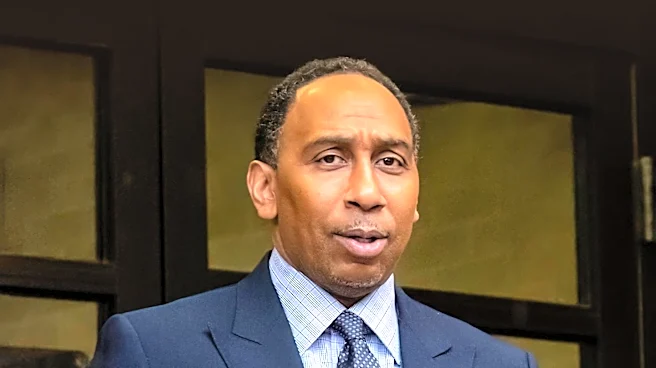
Bobby Burack, a writer for the conservative sports outlet OutKick, has publicly criticized ESPN's decision to feature Stephen A. Smith on 'Monday Night Countdown' alongside Pat McAfee. Burack expressed his disapproval via a tweet, stating that Smith "doesn't
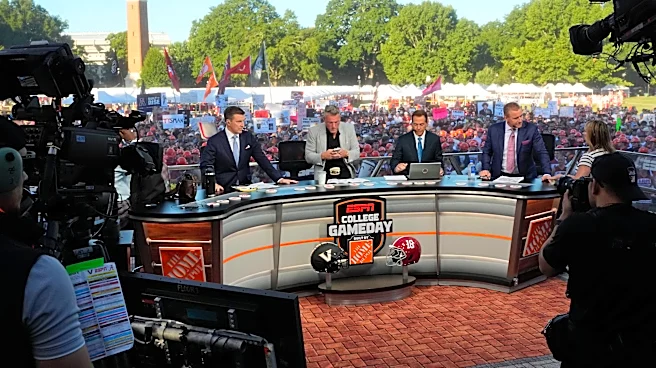
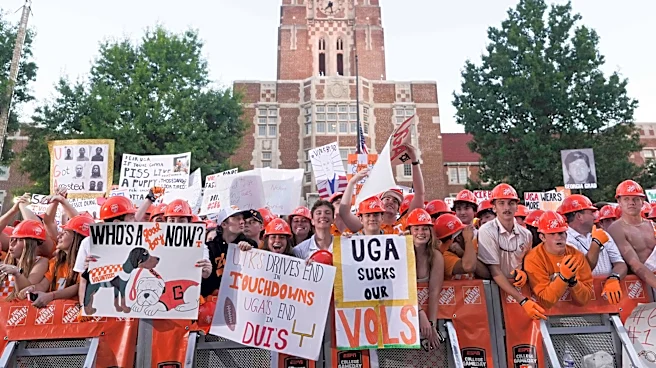
know football" and is primarily an "NBA guy." He further suggested that this move, along with other recent decisions by ESPN, is an attempt by management to demonstrate diversity, linking it to concepts like Diversity, Equity, and Inclusion (DEI) and implying it's a compensatory action for the firing of Ryan Clark. Stephen A. Smith, a prominent ESPN personality since 2003, is known for his work on 'NBA Shootaround' and 'First Take.' Pat McAfee, who hosts 'The Pat McAfee Show' and is a full-time panelist on 'College GameDay,' also made his debut on 'Monday Night Countdown' this season. Smith clarified in an interview with Front Office Sports that McAfee operates with a unique level of independence, leasing his show to ESPN while owning his own platforms, unlike Smith who is directly employed by the network.
Why It's Important?
This criticism highlights a growing tension within sports media regarding on-air talent selection and perceived editorial direction. Burack's comments, particularly his reference to DEI, tap into a broader cultural and political debate about diversity initiatives in corporate settings, including media. The implication that ESPN's staffing choices are driven by a desire to appear diverse rather than solely by merit or expertise could alienate certain segments of its audience and fuel accusations of 'wokeness' within sports broadcasting. For ESPN, a major sports network, such public critiques from influential sports media figures can impact its brand image and viewership, especially if a significant portion of its audience resonates with these sentiments. The distinction Stephen A. Smith drew between his and Pat McAfee's contractual relationships with ESPN also sheds light on evolving business models in sports media, where independent creators can leverage their personal brands while partnering with large networks, potentially leading to different editorial freedoms and audience expectations.
What's Next?
It remains to be seen how ESPN will respond to this criticism, if at all. The network may choose to ignore the comments, or it could subtly adjust its programming strategies to address audience feedback without explicitly acknowledging the controversy. The ongoing debate about diversity in sports media and the qualifications of on-air personalities is likely to continue, with figures like Burack potentially amplifying their critiques. Viewers and other media commentators will be watching to see if ESPN's programming decisions, particularly for high-profile shows like 'Monday Night Countdown,' reflect a shift in response to such public scrutiny. The unique arrangement between Pat McAfee and ESPN, where he maintains ownership of his platforms, could also serve as a model for future talent acquisitions, potentially leading to more independent voices within mainstream sports broadcasting, which might further diversify content but also invite more varied critiques.
Beyond the Headlines
The incident touches upon deeper issues concerning the role of expertise versus personality in sports commentary and the influence of political and cultural ideologies on sports media. Burack's assertion that Smith "doesn't know football" but is an "NBA guy" reflects a purist view that specific sports knowledge should be paramount for commentators on particular programs. This contrasts with the trend of networks prioritizing charismatic personalities who can draw large audiences, regardless of their specialized knowledge across all sports. Furthermore, the explicit mention of DEI by Burack suggests a politicization of sports broadcasting decisions, where hiring practices are viewed through a lens of ideological alignment rather than purely journalistic or entertainment value. This trend could lead to increased polarization within sports media consumption, with audiences gravitating towards outlets that align with their cultural and political viewpoints, potentially fragmenting the traditional sports viewership landscape.