








What's Happening?
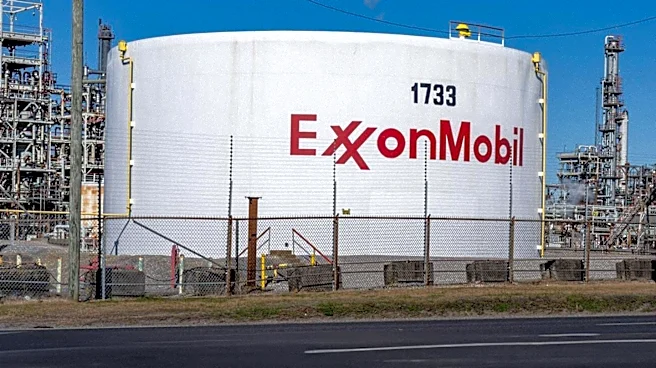
Three ExxonMobil subsidiaries, based in Belgium, Luxembourg, and the Netherlands, have filed an arbitration notice against the European Commission. The lawsuit challenges new European Union rules under the Net Zero Industry Act, which mandate that authorized
oil and gas producers contribute to carbon storage infrastructure. The EU's target is to achieve at least 55.1 million tons of annual carbon dioxide injection capacity by December 31, 2030. ExxonMobil is contesting this requirement, citing high costs and slow permitting processes as reasons for non-compliance. The subsidiaries are invoking the Energy Charter Treaty, an agreement that allows energy companies to dispute government actions perceived to threaten their anticipated earnings. This treaty was originally established to protect investments in former communist countries. The European Commission is currently reviewing ExxonMobil's notice and preparing a response, declining to comment on ongoing litigation.
Why It's Important?
This legal challenge by ExxonMobil could significantly impact the European Union's efforts to establish a robust carbon capture and storage (CCS) market, which is crucial for meeting its climate targets. If ExxonMobil's lawsuit is successful, it could set a precedent that discourages other fossil fuel producers from investing in or being mandated to fund carbon storage initiatives. This could slow down the deployment of essential infrastructure needed to reduce industrial emissions and achieve the EU's goal of cutting net emissions by 90% by 2040. The outcome of this case will also be closely watched by other major oil and gas companies globally, as it could influence future regulatory approaches to carbon emissions and the financial responsibilities of energy producers in climate mitigation efforts. Environmental organizations have warned that such lawsuits could hinder the development of a functioning CCS market.
What's Next?
The European Commission is currently examining ExxonMobil's arbitration notice and is in the process of preparing its response. The legal proceedings are expected to unfold, with ExxonMobil's subsidiaries seeking interim relief to suspend their obligations under the Net Zero Industry Act. The outcome of this litigation will determine whether the EU can enforce its mandate for fossil fuel producers to contribute to carbon storage capacity. This case could also prompt a broader discussion on the role of international investment treaties, like the Energy Charter Treaty, in balancing investor protections with environmental regulations. The progress of carbon storage projects, such as the Northern Lights project in Norway, which aims to store captured CO2 beneath the seabed, will continue to be monitored as the legal battle progresses.
Beyond the Headlines
The lawsuit highlights a growing tension between corporate investment protections and governmental climate policies. The Energy Charter Treaty, originally designed to safeguard energy investments, is increasingly being used by fossil fuel companies to challenge environmental regulations that impact their profitability. This raises questions about the treaty's relevance and potential reform in an era of urgent climate action. The case also underscores the significant financial burden associated with developing large-scale carbon capture and storage infrastructure and the debate over who should bear these costs—governments, taxpayers, or the industries responsible for emissions. The legal battle could influence the future landscape of climate policy, potentially leading to re-evaluations of how climate-related financial responsibilities are allocated and enforced globally.