






What's Happening?
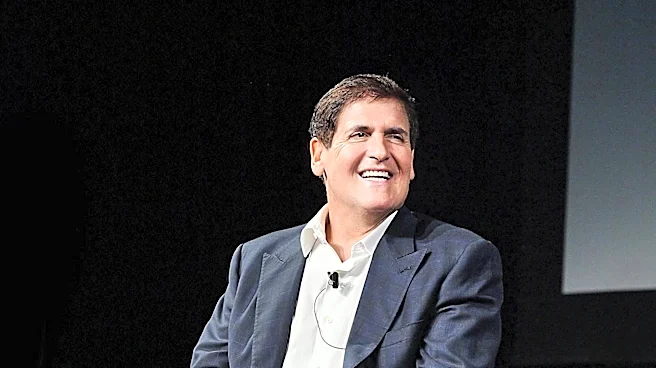
Kevin O'Leary, a prominent investor on the television show 'Shark Tank,' is widely recognized for his unique investment strategy involving royalty deals. Unlike traditional equity investments where an investor buys a percentage of a company, O'Leary's
royalty deals involve a fixed payment per unit sold by the company. This payment structure often includes an initial higher rate until the investor recoups their investment, sometimes followed by a lower, ongoing rate. For instance, in the Wicked Good Cupcakes deal, O'Leary received $1 per cupcake until his investment was repaid, after which the royalty dropped to $0.45 per cupcake with no specified end date. Other examples include Potato Parcel, which involved a royalty of $0.50 to $1 per potato until a cap was reached, and Blueland, where a royalty of $0.50 per product was paid until O'Leary recouped his investment. These deals can either replace equity entirely or be combined with a smaller equity stake, offering a flexible investment model for both the investor and the entrepreneur.
Why It's Important?
The prevalence of Kevin O'Leary's royalty deals on 'Shark Tank' highlights an alternative financing model for U.S. startups and small businesses seeking investment. This structure can be particularly appealing to founders who wish to retain a larger percentage of their company's equity, especially if they anticipate modest sales volumes. For businesses with high sales potential, however, an uncapped royalty deal can become significantly more expensive over time than an equity stake, as the per-unit cost continues to accrue with every sale. The financial implications for founders vary greatly depending on the terms, such as the presence of a cap on total royalty payments or an end date. An uncapped royalty, while potentially allowing founders to keep all their equity, can become a substantial long-term liability, impacting the company's profitability and attractiveness to future acquirers who would factor in the ongoing royalty payments as a cost.
What's Next?
Entrepreneurs considering investment from 'Shark Tank' or similar platforms will continue to evaluate the trade-offs between equity and royalty deals. The success stories and challenges faced by companies that have accepted O'Leary's royalty deals will likely influence future negotiations and investment strategies. Founders will need to carefully model their projected sales and profit margins to determine if a royalty deal is financially viable for their specific business. The ongoing debate about whether a royalty is 'better' than equity will persist, with the answer depending heavily on individual business forecasts, growth expectations, and exit strategies. As the startup landscape evolves, the flexibility and potential long-term costs of such alternative investment structures will remain a critical consideration for both investors and entrepreneurs.
Beyond the Headlines
The use of royalty deals by investors like Kevin O'Leary introduces a fascinating dimension to startup financing, moving beyond conventional equity or debt structures. This model challenges the traditional valuation metrics of a company, as the investor's return is tied directly to sales volume rather than overall company valuation. This can lead to ethical considerations regarding the long-term burden on founders, especially with uncapped royalties that can significantly reduce a company's net revenue over many years. It also raises questions about the fairness of such deals when a product becomes exceptionally successful, potentially leading to disproportionately high returns for the investor compared to their initial capital outlay. The legal implications for future acquisitions are also significant, as an ongoing royalty can be viewed as a liability that complicates the sale or valuation of the company, requiring careful contractual language to address transferability or buyout clauses.