





What's Happening?
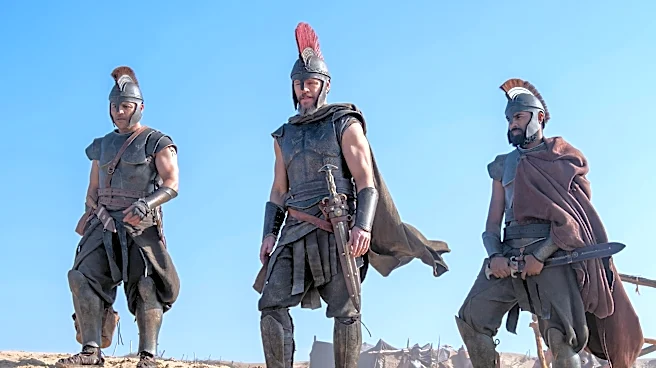
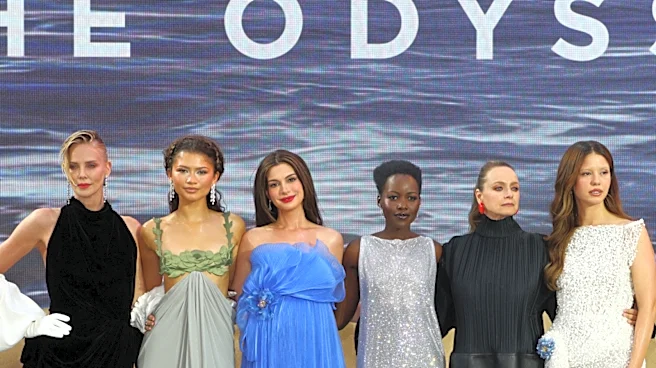
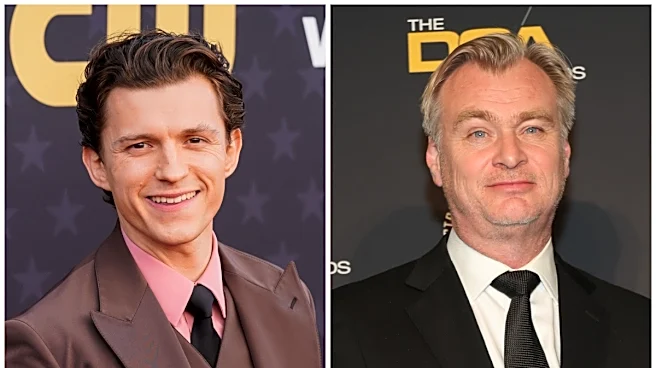
Christopher Nolan's latest film, 'Odyssey', a three-hour adaptation of Homer's epic poem, premiered in London and has been met with enthusiastic reviews from critics. The film, which is shot entirely using large-format Imax film cameras, is being praised
for its production design, scale, and the performances of its cast, including Matt Damon, Anne Hathaway, and Robert Pattinson. Critics have highlighted the film's breathtaking action and its embrace of horror elements, which add a new dimension to Nolan's filmmaking. The film is already being considered a strong contender for the Best Picture Oscar, with particular praise for Pattinson's portrayal of the villainous Antinous.
Why It's Important?
The release of 'Odyssey' is significant as it marks another ambitious project from Christopher Nolan, known for his innovative use of Imax technology and complex storytelling. The film's positive reception could bolster the resurgence of cinema-going, which has been recovering post-pandemic. With an estimated budget of $250 million, the film needs to gross at least $500 million to break even, but the strong critical response and the current appetite for blockbuster films suggest it could achieve this. The film's success could also influence future adaptations of classical literature, demonstrating the potential for such stories to be reimagined for modern audiences.
What's Next?
Following its premiere, 'Odyssey' is set for a worldwide release, with expectations high for its box office performance. The film's reception could impact the awards season, particularly the Oscars, where it is already being considered a frontrunner. The success of 'Odyssey' may also encourage other filmmakers to explore large-format filming techniques and classical adaptations. As audiences and critics continue to respond to the film, its impact on the industry and its potential to inspire similar projects will become clearer.