
What's Happening?
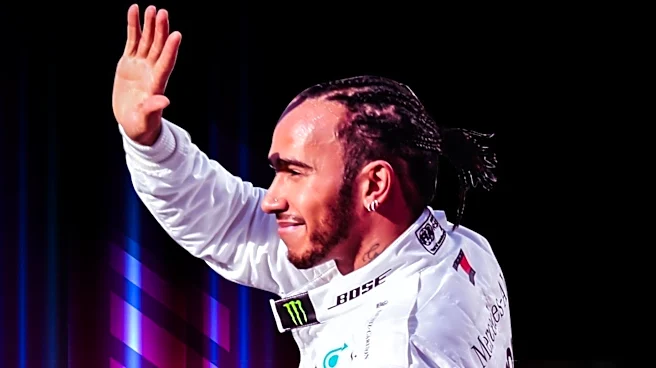
Lewis Hamilton, the seven-time Formula 1 world champion, delivered a message about older drivers criticizing younger competitors, which has been interpreted as a subtle response to Fernando Alonso. During
the 2026 Brazilian Grand Prix weekend, Hamilton defended the sport's emerging talent, stating his desire to avoid becoming an experienced driver who speaks negatively about younger generations. This comes after Fernando Alonso's controversial criticism of Alexander Albon following an incident at the 2026 United States Grand Prix, where Alonso questioned the overall quality of drivers in the bottom third of the grid. While Hamilton did not explicitly name Alonso, the timing and nature of his comments have led to speculation that they were directed at his long-standing rival.
Why It's Important?
This exchange highlights a generational and philosophical divide among top Formula 1 drivers regarding how experienced competitors should interact with and mentor younger talent. Lewis Hamilton's stance emphasizes empathy and encouragement, advocating for support for emerging drivers facing immense pressure. Conversely, Fernando Alonso's comments reflect a more critical assessment of the current grid's lower-tier talent. This divergence in views can influence the culture within the paddock and potentially impact how young drivers are perceived and supported. It also underscores the scrutiny and pressure faced by all drivers in Formula 1, regardless of their experience level, and the different ways veterans choose to navigate their roles as leaders in the sport.
What's Next?
The ongoing debate about the quality of the Formula 1 grid and the role of veteran drivers in mentoring or criticizing younger talent is likely to continue. While no direct confrontation occurred, the contrasting philosophies expressed by Hamilton and Alonso could spark further discussions among drivers, teams, and the media. This might lead to more public statements from other drivers or team principals weighing in on the issue. The focus will remain on how young drivers, like Andrea Kimi Antonelli, continue to perform and whether their achievements will validate Hamilton's supportive stance or Alonso's more critical perspective. The incident also sets a precedent for how veteran drivers might choose to voice their opinions on the competitive landscape in the future.
Beyond the Headlines
Beyond the immediate rivalry, this exchange touches upon broader themes of mentorship, professional conduct, and the responsibility of established figures in any competitive field. Lewis Hamilton's emphasis on empathy and avoiding negativity speaks to a desire to foster a more supportive environment for new entrants, potentially shaping the future ethos of Formula 1. Fernando Alonso's more direct criticism, while potentially harsh, could also be seen as a call for higher standards. This dynamic reflects the tension between maintaining elite performance expectations and nurturing new talent. It also raises questions about the impact of public criticism on young athletes' development and confidence, and the role of sports figures as role models.