



What's Happening?
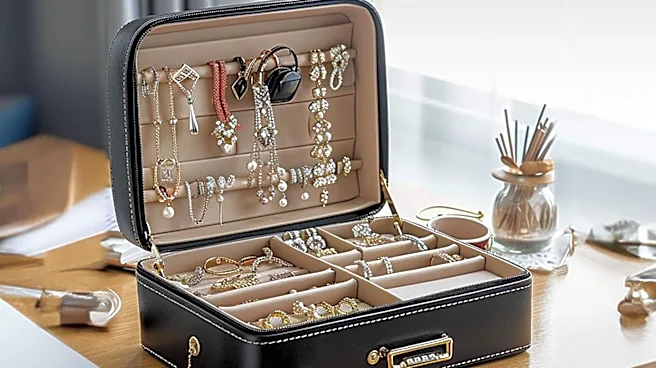
Various jewelry organization solutions are being highlighted to help individuals manage their collections at home and while traveling. These solutions range from multi-tiered boxes to rotating organizers and hanging storage options. For home use, a 6-tier
jewelry box organizer provides vertical storage with different compartments for rings, earrings, bracelets, and necklaces, aiming to prevent tangling. Another option is a 360-degree rotating jewelry box with five drawers, designed for easy access and efficient use of limited counter space. For those with larger collections, jewelry cabinets are presented as a more substantial furniture piece. Travel-specific organizers, such as leather cases with dedicated compartments and zippered designs, are also discussed to protect jewelry and keep it untangled during transit. The emphasis is on selecting organizers that match the size and type of one's jewelry collection, with advice to consider purging unused items before investing in new storage.
Why It's Important?
Effective jewelry organization is important for consumers as it can significantly reduce the time and frustration associated with tangled or misplaced items. For individuals, well-organized jewelry means easier access to pieces, potentially leading to more frequent wear and enjoyment of their collection. From a practical standpoint, proper storage helps protect delicate items from damage, such as scratches or broken clasps, thereby extending the lifespan of valuable pieces. The market for jewelry organizers reflects a consumer need for functional and aesthetically pleasing storage solutions that cater to varying collection sizes and lifestyles. This trend also highlights a broader consumer interest in home organization and efficiency, where products are designed to simplify daily routines and maintain order. For retailers, understanding these consumer needs can drive product development and marketing strategies in the home goods and accessories sectors.
What's Next?
Consumers are encouraged to assess their current jewelry collections and storage needs before purchasing new organizers. The next step involves evaluating existing pieces to determine what should be kept, donated, or sold, aligning with a broader trend of decluttering and mindful consumption. Following this, individuals can select an organizer that best suits their edited collection and lifestyle, whether it's a compact box for everyday wear, a hanging organizer for visibility, or a larger cabinet for extensive collections. Manufacturers and retailers in the home organization and accessories industries will likely continue to innovate, offering more specialized and versatile storage solutions. This could include designs that integrate smart technology, offer enhanced security features, or are made from sustainable materials, catering to evolving consumer preferences for both functionality and ethical considerations.
Beyond the Headlines
Beyond the immediate benefit of tidier spaces, the focus on jewelry organization touches upon deeper aspects of personal value and sentimentality. Many pieces of jewelry hold significant emotional or historical meaning, making their proper care and display important. The act of organizing can become a reflective process, prompting individuals to reconnect with memories associated with specific items and to make conscious decisions about what they truly cherish. This trend also subtly influences consumer behavior, encouraging a shift from accumulating excessive items to curating a more meaningful and manageable collection. Furthermore, the emphasis on visibility in storage solutions, such as hanging organizers, suggests a psychological aspect where seeing one's possessions increases their perceived utility and enjoyment, fostering a more intentional relationship with personal belongings rather than simply storing them away.