




What's Happening?
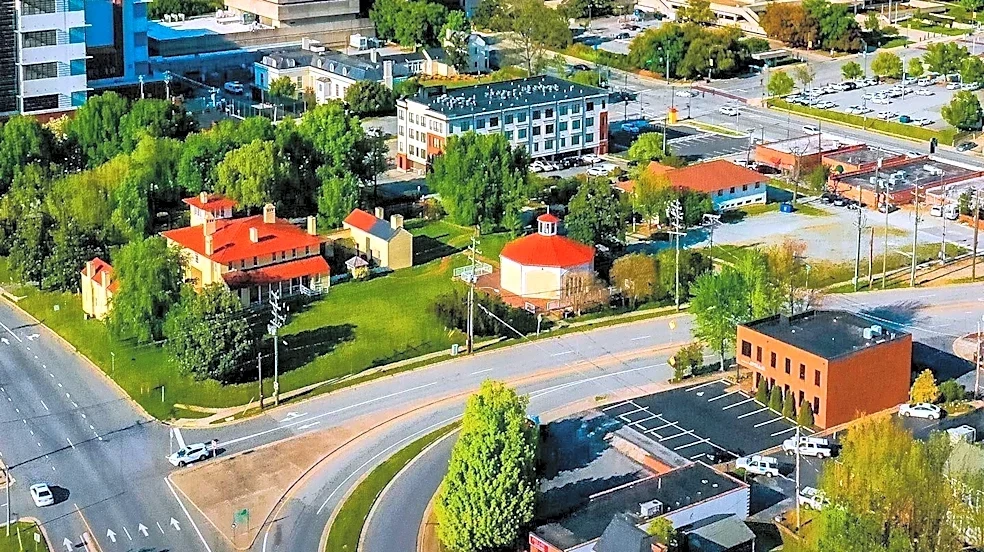
Columbus, Georgia, is recognizing ten of its oldest businesses that have continuously operated for at least 75 years, with some dating back to the city's founding in 1828. These establishments include the Columbus Ledger-Enquirer, which began as the Columbus Enquirer in 1828,
and Willcox-Lumpkin Co., an insurance agency established in 1848. Other long-standing businesses are the Springer Opera House (1871), Schomburg’s Jewelers (1872), Goldens’ Foundry & Machine Co. (1882), W.C. Bradley Co. (1885), and the Synovus banking legacy (1888). Dinglewood Pharmacy (1918), Striffler-Hamby Mortuary (1923), and WRCG Radio (originally WRBL, 1928) also made the list. These businesses have navigated significant historical events, economic shifts, and changes in consumer behavior, demonstrating remarkable resilience and adaptability. Their histories reflect Columbus's evolution from a riverfront trading town to a regional hub for banking, manufacturing, commerce, and culture.
Why It's Important?
The endurance of these businesses highlights the foundational economic and cultural pillars of Columbus, Georgia. Their longevity signifies more than just commercial success; it represents a continuous thread connecting the city's past with its present identity. These enterprises have provided stable employment, contributed to local economies through various eras, and often served as community landmarks. For instance, the Springer Opera House has been a cultural cornerstone since 1871, while Dinglewood Pharmacy's lunch counter has become a part of Columbus's food culture. The survival of these businesses, despite mergers, ownership changes, and industry transformations, underscores the importance of adaptability, strong customer relationships, and, in some cases, family continuity. They offer tangible links to the city's heritage, influencing its economic landscape and cultural narrative for generations of residents.
What's Next?
The continued operation of these historic businesses suggests an ongoing commitment to their respective industries and the Columbus community. While some, like Synovus, have undergone significant corporate changes, their presence in Columbus remains strong, with plans for continued investment in the city. The recognition of these businesses may inspire other local enterprises to focus on long-term sustainability and community integration. For residents, these institutions will likely continue to serve as familiar touchstones, preserving a sense of local identity and history. Future developments may include further adaptations to modern markets, potential expansions, or continued efforts to maintain their unique historical legacies within a changing economic environment. Their stories will likely continue to be celebrated as examples of enduring local enterprise.
Beyond the Headlines
The survival of these businesses offers deeper insights into the economic and social fabric of American cities. It illustrates how certain enterprises can become integral to a community's identity, transcending their primary commercial function to become cultural institutions. The ability of businesses like Goldens’ Foundry & Machine Co. to adapt from supplying textile mills to developing consumer products, or the transformation of the Columbus Ledger-Enquirer through mergers, highlights the dynamic nature of commerce and the necessity of innovation. Furthermore, the preservation efforts that saved the Springer Opera House demonstrate the value communities place on their historical assets. These stories underscore themes of resilience, tradition, and evolution, reflecting broader trends in American business history where local enterprises often navigate significant societal and economic shifts to maintain their relevance and legacy.