
What's Happening?
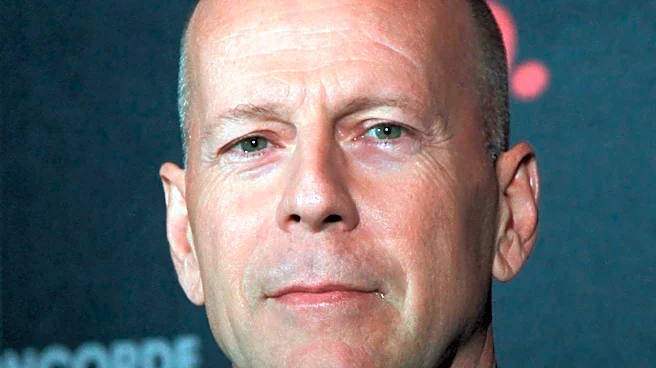
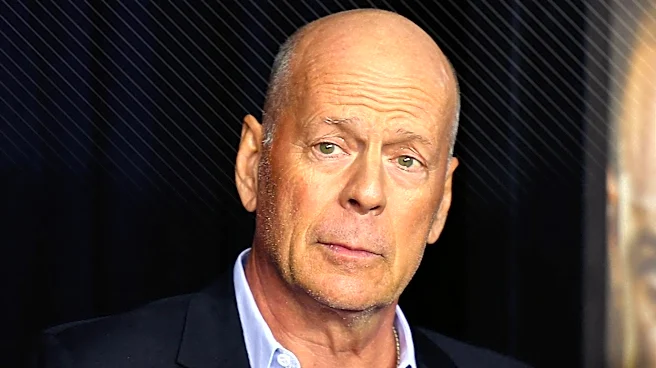
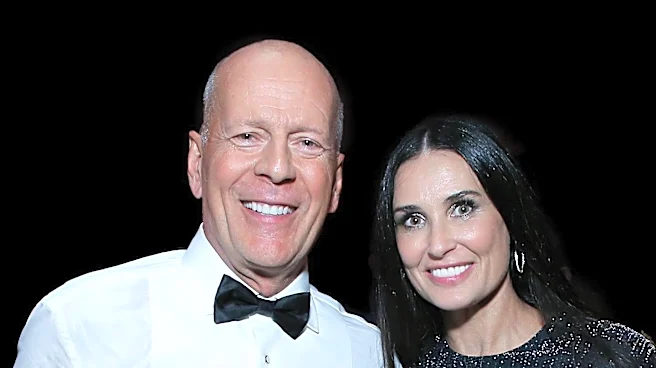
Tallulah Willis, daughter of actor Bruce Willis and Demi Moore, recently posted a photo on social media showing her holding hands and hugging her father on an outdoor swing. She subsequently deleted the image and issued an apology to her followers. In
a later post featuring other past photos, Willis explained that she had a 'beautiful time' with her father and that someone had 'affectionately left' her a picture of them watching Frankie Valli sing together. She stated that her excitement led her to not consider the photo might be 'too private and intimate' for public release, acknowledging her 'non-attention' and promising to be more cautious in the future. Bruce Willis was diagnosed with aphasia in 2022, leading him to stop acting, and a year later, his diagnosis was updated to frontal temporal dementia (FTD). His wife, Emma Heming, and ex-wife, Demi Moore, have both spoken publicly about the challenges of his condition.
Why It's Important?
This event highlights the complex relationship between public figures, their families, and social media in an era where personal moments can quickly become public discourse. Tallulah Willis's decision to delete the photo and apologize, despite the seemingly innocuous nature of the image, underscores the intense scrutiny and varied expectations placed upon celebrity families, especially when dealing with sensitive personal matters like a parent's health. The public's reaction, largely supportive and questioning the need for an apology, also reflects a growing sentiment that genuine family moments, even those involving celebrities, should not be subject to undue criticism. This incident touches upon the broader discussion of privacy boundaries in the digital age and the emotional labor involved in managing public perception for individuals connected to high-profile personalities.
What's Next?
While there are no immediate 'next steps' in a formal sense, this incident may influence how Tallulah Willis and other family members choose to share personal moments involving Bruce Willis in the future. The overwhelmingly supportive fan response could potentially encourage more openness, or conversely, the initial self-censorship might lead to increased caution. The ongoing public interest in Bruce Willis's health and his family's well-being suggests that any future social media posts or public statements from the family will continue to be closely watched and interpreted. This event serves as a micro-example of the continuous negotiation between personal privacy and public interest that celebrity families navigate daily.
Beyond the Headlines
The situation with Tallulah Willis and her father's photo delves into the ethical considerations of sharing personal moments, particularly when one family member is facing a significant health challenge. It raises questions about who owns the narrative surrounding a public figure's private life, especially when that figure may be less able to control their own public image due to illness. The public's reaction, which largely defended Tallulah's right to share a loving moment, suggests a collective empathy for families dealing with dementia and a desire to see authentic human connection rather than curated perfection. This incident subtly contributes to the evolving cultural conversation about vulnerability, authenticity, and the boundaries of public consumption of private grief and familial love in the digital sphere.