





What's Happening?
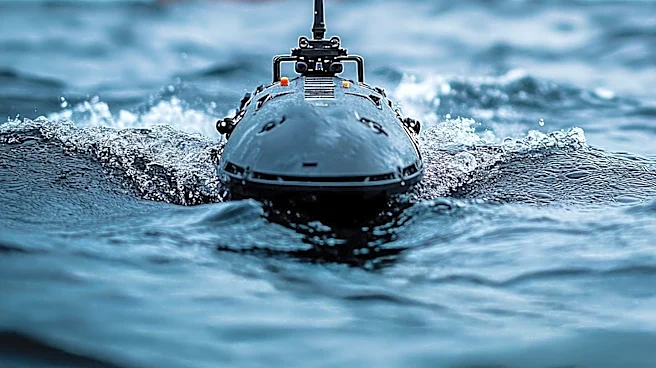
ACUA Ocean has developed a 46-foot drone boat, originally powered by hydrogen, which has now been fitted with a diesel-electric system. The vessel, known as Pioneer, demonstrated its capabilities by operating continuously for over 100 hours off the coast
of Plymouth, showcasing its ability to perform remote missions. The switch from hydrogen to diesel was driven by the need for greater endurance, with the diesel system offering up to 50 days of operation compared to 18 days with hydrogen. The boat's design, featuring a SWATH (small waterplane area twin hull) configuration, provides exceptional stability, making it suitable for long-duration missions in challenging sea conditions.
Why It's Important?
The development of ACUA Ocean's drone boat highlights the ongoing innovation in unmanned maritime technology. The ability to operate autonomously for extended periods without human intervention has significant implications for naval and commercial applications. The switch to a diesel-electric system underscores the current limitations of hydrogen storage and the need for more efficient energy solutions. This advancement could influence future naval strategies, particularly in surveillance and reconnaissance missions, and drive further research into alternative energy sources for maritime use.
What's Next?
ACUA Ocean plans to continue refining its drone boat technology, with the second Pioneer vessel expected to enter service in 2027. The company aims to secure more commercial orders and expand its capabilities, potentially integrating more advanced energy systems as technology evolves. The success of the Pioneer could lead to increased interest from military and commercial sectors, driving further investment in unmanned maritime systems. The ongoing development of hydrogen storage solutions could also play a crucial role in the future viability of hydrogen-powered vessels.