







What's Happening?
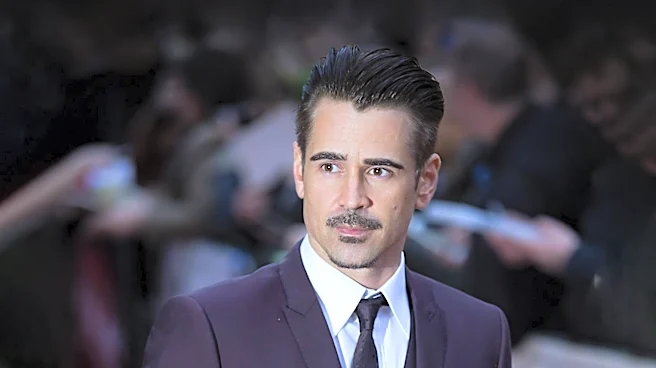
Actor Colin Farrell's eldest son, James, 23, makes a rare public appearance in the trailer for Farrell's upcoming HBO documentary, 'The Slightest Touch,' set to premiere on November 25. James, who has Angelman syndrome—a rare genetic condition affecting
speech, movement, balance, and development—is seen sharing an emotional moment with his father. The documentary delves into Farrell's personal life, including his experiences as a father to a child with a disability, a topic he has generally kept private. Farrell established the Colin Farrell Foundation in 2024 to support adults with intellectual disabilities and their families, addressing the challenges faced when individuals age out of childhood support systems. The film also chronicles Farrell's friendship with Emma Fogarty, a disability rights activist living with epidermolysis bullosa, as they prepare for the Dublin Marathon.
Why It's Important?
This documentary is significant as it brings increased visibility to Angelman syndrome and the broader challenges faced by individuals with intellectual disabilities and their families. Colin Farrell's public sharing of his family's experience can help destigmatize these conditions and foster greater understanding and empathy. The establishment of the Colin Farrell Foundation highlights a critical gap in support services for adults with intellectual disabilities, particularly as they transition out of educational programs. By focusing on this often-overlooked demographic, the foundation aims to advocate for improved access to services and better integration into society. The film's narrative, combining personal stories with a physical challenge like a marathon, underscores themes of resilience, friendship, and the importance of support networks for those navigating life with rare conditions.
What's Next?
The premiere of 'The Slightest Touch' on HBO on November 25 is expected to draw significant attention to Angelman syndrome and the issues surrounding adult intellectual disabilities. The documentary's release will likely amplify the mission of the Colin Farrell Foundation, potentially leading to increased awareness, fundraising, and advocacy efforts for improved support systems. Discussions around the film may prompt broader conversations among policymakers, healthcare providers, and advocacy groups about the need for more comprehensive and sustained support for individuals with disabilities beyond childhood. The personal nature of the documentary could also encourage other public figures to share their experiences, further normalizing conversations about disability and fostering a more inclusive societal dialogue.
Beyond the Headlines
Beyond the immediate impact of the documentary, Farrell's decision to share his family's story touches upon deeper societal implications regarding privacy, advocacy, and the representation of disability in media. His careful consideration of James's comfort while making the personal decision to film highlights the ethical complexities involved in sharing the lives of vulnerable individuals. The film could serve as a powerful tool for education, challenging preconceived notions about intellectual disabilities and promoting a more nuanced understanding of the daily lives and capabilities of those affected. Furthermore, the foundation's focus on the transition to adulthood for individuals with disabilities points to systemic issues in social welfare and healthcare, urging a re-evaluation of how society supports its most vulnerable members throughout their lifespan.