
What's Happening?
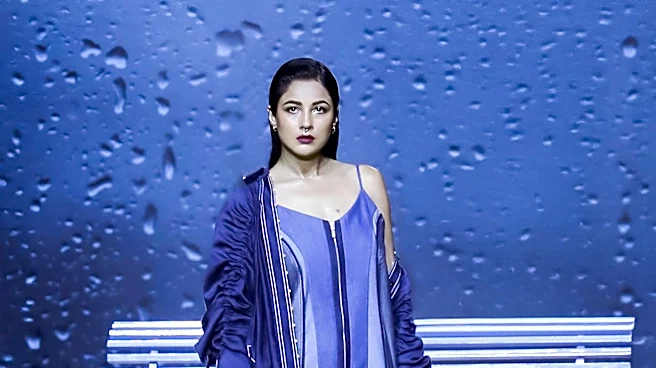
CFGNY, a fashion collective, celebrated its 10th anniversary with a conceptual fashion show in New York. The event featured innovative designs, including bump dresses inspired by Rei Kawakubo's 1997 collection,
but with a twist—tiny plush toys creating 'cute, yet grotesque tumors on the body.' The show was attended by notable figures such as Blake Abbie and Ken Leung, who emphasized the importance of Asian-American representation in the arts. The collection played with themes of cuteness and ambivalence, using clashing patterns and deconstructed designs. The presentation, titled CFG-20260717, drew inspiration from the history of video technology, particularly the impact of the Portapak on New York's video art scene.
Why It's Important?
The event underscores the growing influence of Asian-American narratives in the cultural and fashion landscapes of New York. By highlighting Asian-American stories, CFGNY contributes to a broader dialogue about diversity and representation in the arts. The fashion show not only celebrates CFGNY's decade-long journey but also reflects a shift towards more inclusive and experimental artistic expressions. This is significant in a time when cultural representation is increasingly recognized as vital to the arts, offering new opportunities for Asian-American artists to explore and express their identities without the pressure of perfection.
What's Next?
CFGNY's future endeavors include continuing to explore and expand their artistic practices. With current exhibitions at the Whitney Biennial and The Met, the collective aims to further influence the fashion and art worlds. As they look to the next decade, CFGNY plans to embrace learning and experimentation, potentially leading to more groundbreaking work that challenges traditional norms and encourages cultural dialogue.
Beyond the Headlines
The fashion show also highlights the evolving nature of fashion as a medium for cultural commentary and artistic expression. By integrating elements of video technology history, CFGNY bridges the gap between fashion and other art forms, suggesting a future where interdisciplinary approaches become more common. This could lead to a broader acceptance and integration of diverse cultural influences in mainstream fashion, promoting a more inclusive industry.