




What's Happening?
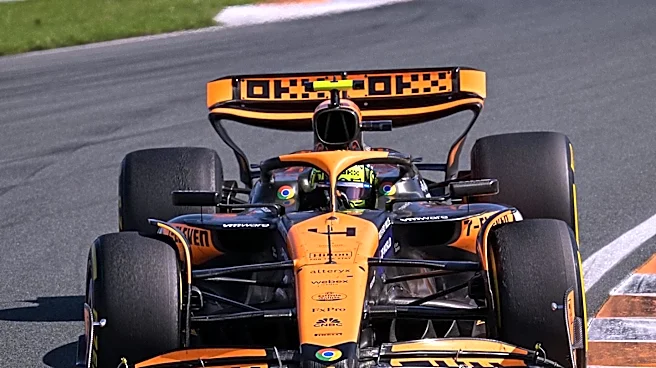
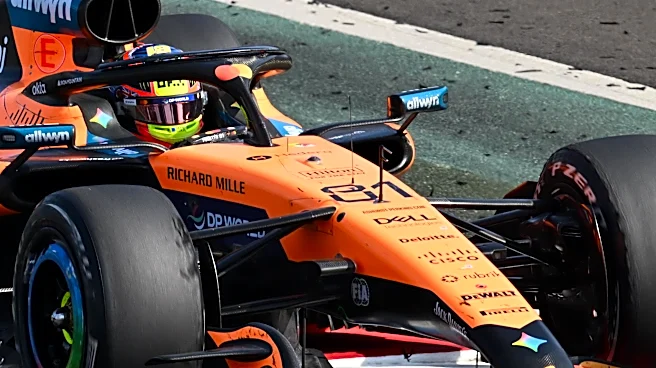
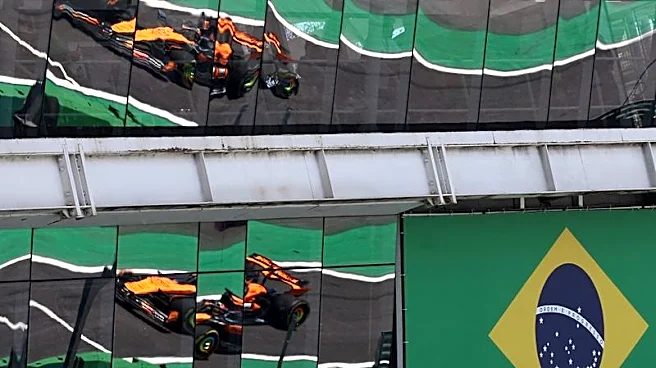
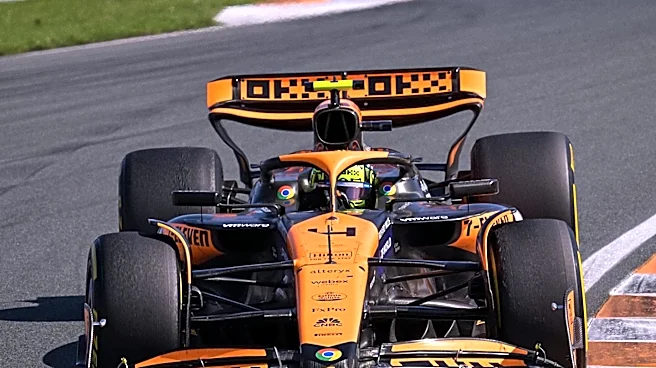
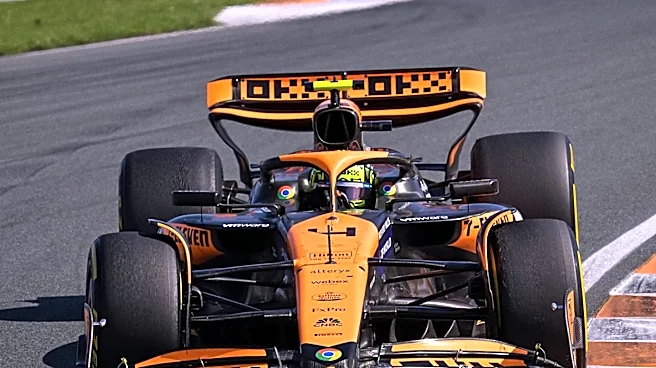
McLaren has unveiled a comprehensive package of aerodynamic upgrades for its MCL40 car at the Brazilian Grand Prix, making it the only Formula 1 team to introduce such significant changes for the event. The upgrades include a completely redesigned front
wing, a new rear wing assembly, an updated beam wing, and modifications to the floor. The front wing, in particular, represents a new concept for the team, featuring multiple revisions across its elements, including the attachment points for the main plane and endplate, and adjustments to the nose-to-main plane connection. These changes are intended to improve airflow, increase aerodynamic load, and optimize the interaction between components, ultimately enhancing the car's overall aerodynamic performance and balance. Other leading teams like Ferrari, Red Bull, and Mercedes have not declared any new components for the São Paulo weekend, highlighting McLaren's aggressive development push.
Why It's Important?
This strategic move by McLaren is significant for several reasons. Firstly, it demonstrates the team's commitment to continuous improvement and its ambition to challenge for higher positions in the Constructors' Championship, particularly as they aim to recover third place from Red Bull. The introduction of a new front wing concept is especially noteworthy, as McLaren's Chief Technical Officer of Aerodynamics, Peter Prodromou, confirmed that this design will form the starting point for the team's 2027 Formula 1 car. This indicates a long-term vision and an early investment in future performance, potentially giving McLaren a head start in the development cycle for the next generation of F1 regulations. By testing these foundational elements in a competitive race environment, McLaren can gather crucial data and refine their approach, which could translate into a significant competitive advantage in the coming seasons. The aggressive upgrade strategy also signals McLaren's intent to maintain its momentum and close the performance gap to the front-running teams.
What's Next?
The immediate focus for McLaren will be to assess the effectiveness of these new upgrades during the Brazilian Grand Prix weekend. The team will be gathering data on the track to understand how the new components perform and how they impact the car's balance and overall speed. This data will be crucial for further refinement and development. Beyond the current season, the insights gained from the new front wing concept will directly feed into the design and development of McLaren's 2027 Formula 1 car. This early implementation of a future concept suggests that McLaren is already laying the groundwork for its long-term competitive strategy. The performance of these upgrades in Brazil could also influence the team's approach to the remaining races of the current season, as they continue their fight for third place in the Constructors' Championship. The success or failure of these upgrades will be closely watched by competitors and fans alike, as it could provide an early indication of McLaren's potential for future seasons.
Beyond the Headlines
McLaren's decision to introduce a 2027-spec front wing concept so early in the development cycle highlights a broader trend in Formula 1: the increasing importance of long-term strategic planning and continuous innovation. This approach allows teams to integrate new ideas and technologies progressively, rather than waiting for a complete overhaul. It also underscores the intense competition in F1, where even minor aerodynamic advantages can significantly impact race outcomes and championship standings. The ethical implications of such early development could be debated, as it potentially allows wealthier teams to gain an advantage by investing heavily in future regulations well in advance. However, it also fosters innovation and pushes the boundaries of automotive engineering. This strategy could lead to a more dynamic and technologically advanced sport, but it also raises questions about resource allocation and competitive fairness within the F1 ecosystem.