



What's Happening?
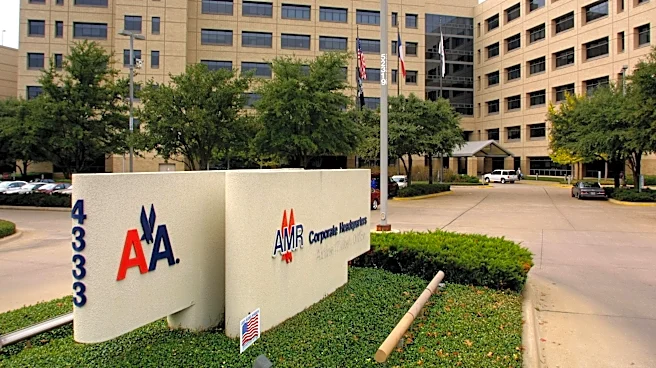
American Airlines is reportedly considering bringing in an outsider as president and potential heir apparent to CEO Robert Isom, with a possible announcement by year-end. This development comes as former Wall Street Journal airline reporter Scott McCartney
suggests that conversations indicate the airline is looking for an external candidate. When Robert Isom became CEO in 2022, he did not name a successor for his previous role as president. The board's consideration of an external hire is seen as a more plausible scenario than outright replacing Isom as CEO, as McCartney believes Isom intends to turn the airline around before handing it off. Recent management changes at American Airlines include the retirement of Vice Chair Steve Johnson and Chief Operating Officer David Seymour, who never assumed Isom's former president role. The board's strategy appears to be a 'try before they buy' approach, allowing them to assess a new president's capabilities before a potential CEO transition.
Why It's Important?
This potential leadership change at American Airlines carries significant implications for the U.S. airline industry and the company's strategic direction. Bringing in an external president could signal a major shift in how American Airlines addresses its operational challenges and competitive standing. The 'try before they buy' strategy suggests a cautious but deliberate approach by the board to ensure a smooth succession and to inject new perspectives into the airline's management. This move could impact American Airlines' long-term performance, its relationship with employees, and its ability to compete effectively against rivals like Delta and United. A new president, especially one with a strong operational or commercial background from another major airline, could bring fresh strategies to improve customer experience, financial performance, and employee satisfaction. The decision to look outside the company also indicates that the board may perceive a need for capabilities or leadership styles not currently available internally to tackle the airline's complex issues.
What's Next?
The potential hiring of a new president for American Airlines could occur before the end of the year. Scott McCartney suggests that Southwest Airlines' COO Andrew Watterson is a strong external candidate, given his experience in both revenue and operational roles. Other potential candidates mentioned include Paul Jacobson, CFO of General Motors (formerly of Delta), and Peter Ingram, former CEO of Hawaiian Airlines. The board's decision will likely focus on finding someone who can address American Airlines' primary challenges, particularly around revenue generation and operational reliability. The current Chief Commercial Officer, Nat Pieper, has already been performing many duties typically associated with a president, making him a plausible internal successor. However, the reported desire for someone with 'Delta experience' suggests a preference for a specific type of expertise. The selection of a new president will set the stage for future leadership transitions and could significantly influence American Airlines' strategic priorities and operational focus in the coming years.
Beyond the Headlines
The reported search for an external president at American Airlines highlights a critical aspect of corporate governance: succession planning and the strategic use of leadership roles. By potentially hiring a president as an 'heir apparent,' the board can mitigate risks associated with a direct CEO replacement, allowing for a period of evaluation and integration. This approach can be particularly valuable in complex industries like aviation, where operational nuances and regulatory environments demand experienced leadership. The emphasis on candidates with 'Delta experience' suggests a desire to emulate the success of a competitor known for its strong operational performance and premium revenue strategy. This could lead to a strategic realignment at American Airlines, focusing more on service quality and revenue optimization rather than solely on cost efficiency. The decision also underscores the ongoing challenge for large corporations to balance internal talent development with the need to bring in external expertise to drive innovation and address persistent issues, potentially leading to a cultural shift within the organization.