







What's Happening?
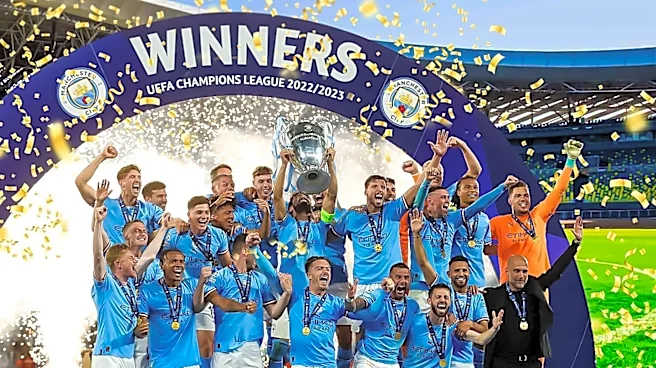
Manchester City, already found guilty of 114 charges of breaching financial rules between 2009 and 2018, is now facing increasing pressure from English soccer executives to be investigated for potential further infractions beyond the 2018 season. The
initial investigation revealed that the club inflated sponsorship deals through disguised owner investment. A key question being raised is why the club's commercial income remained at the same level after 2018 if the alleged practices ceased. The Independent Commission's decision noted that Manchester City and its Abu Dhabi-based sponsors were 'Related Parties.' If this relationship did not change, it could form the basis for more charges in subsequent seasons, as the club did not report this or have the fair market values of sponsorships assessed. The original investigation was prompted by leaked emails from 'football leaks' published in November 2018, covering the period up to that year. While some executives are pushing for a new inquiry, others express concern about prolonging the process, which has already taken three years and is still ongoing due to Manchester City's appeal.
Why It's Important?
The potential for further charges against Manchester City carries significant implications for the integrity and competitive balance of English football. If new breaches are uncovered, it could lead to more severe penalties, potentially including additional points deductions, further fines, or even the stripping of more titles won during the period under renewed scrutiny. This situation highlights the ongoing debate within the sport regarding financial fair play and the enforcement of regulations designed to ensure a level playing field. The outcome could influence how other clubs manage their finances and sponsorship deals, potentially leading to stricter oversight across the league. For Manchester City, additional investigations would prolong a period of uncertainty and could further tarnish its reputation, regardless of the eventual findings. The 'dilemma' for the Premier League lies in balancing the desire to uphold rules with the potential for a protracted and damaging legal battle that could affect the league's image for years.
What's Next?
The immediate next step involves the ongoing appeal by Manchester City against the initial guilty verdict. All sanctions related to the 114 charges are currently on hold pending the outcome of this appeal. Concurrently, the Premier League board, comprising its chair, chief executive, and three independent non-executive directors, will be responsible for recommending a punishment to an independent commission. The commission will ultimately decide on any sanctions, which could range from fines and transfer bans to points deductions, expulsion from the league, or the stripping of past titles. The debate among soccer executives about investigating post-2018 activities will likely continue, potentially leading to formal requests for a new inquiry. However, the lack of a 'smoking gun' like the leaked emails that initiated the first investigation could make it challenging to launch a new case. The Premier League's decision on whether to pursue further investigations will be crucial in determining the long-term trajectory of this complex financial scandal.
Beyond the Headlines
Beyond the immediate legal and sporting ramifications, this situation raises deeper questions about the transparency and accountability of financial dealings in professional sports. The concept of 'Related Parties' in sponsorship agreements, and the potential for disguised owner investment, highlights a complex area where financial regulations can be exploited. The ongoing scrutiny of Manchester City could lead to a re-evaluation of financial fair play rules, potentially resulting in more robust mechanisms for monitoring and enforcing compliance across football leagues globally. Ethically, the case challenges the notion of fair competition, as prolonged financial advantages could undermine the spirit of sport. The outcome will also test the Premier League's ability to maintain its credibility as a governing body capable of enforcing its own rules impartially, especially when dealing with powerful and financially influential clubs. The long-term cultural impact could be a shift in fan perception regarding club ownership and the financial models that underpin modern football.