




What's Happening?
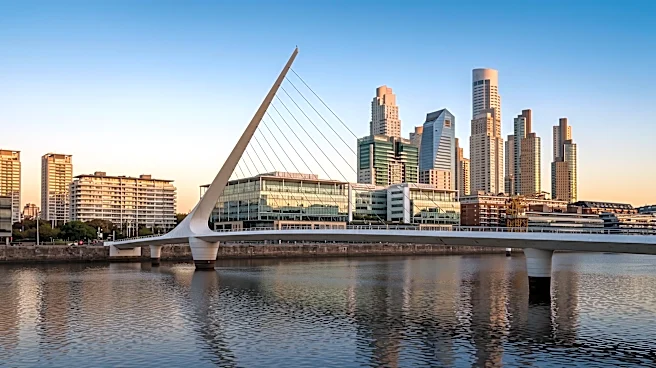
Argentine President Javier Milei has formally appealed to the International Automobile Federation (FIA) for the return of Formula 1 to Argentina. Speaking at the FIA American Congress in Buenos Aires, President Milei emphasized Argentina's deep-rooted
passion for motorsport, citing the country's rich history with legendary drivers like Juan Manuel Fangio and Carlos Reutemann. He highlighted the massive public turnout for an exhibition by Argentine Alpine driver Franco Colapinto in Buenos Aires, which drew approximately 500,000 people, as evidence of the enduring local interest. The capital's Oscar y Juan Gálvez circuit, which hosted 20 F1 Grands Prix between 1953 and 1998, is currently undergoing a $100 million renovation project, expected to conclude by early 2027, to upgrade its facilities for potential F1 and MotoGP events.
Why It's Important?
The potential return of Formula 1 to Argentina carries significant economic and cultural implications. An F1 Grand Prix would inject substantial revenue into the local economy through tourism, hospitality, and related services, creating jobs and boosting international visibility for Buenos Aires and Argentina. For the U.S., while not directly hosting the event, an expanded F1 calendar in the Americas could increase viewership and engagement among American motorsport fans, potentially leading to more investment in F1-related media and merchandise. The renovation project, costing an estimated $100 million, signifies a major infrastructure investment, aiming to meet the stringent standards required for hosting top-tier international motorsport events. This initiative reflects a broader strategy to leverage sports as a tool for national development and international prestige.
What's Next?
The FIA has not yet issued a formal response to President Milei's request. The ongoing renovations at the Oscar y Juan Gálvez circuit are crucial, with completion anticipated by early 2027. Once the upgrades are finished, the circuit will need to undergo inspection and certification by the FIA to ensure it meets all safety and operational requirements for Formula 1. Should the FIA approve, negotiations would then commence to secure a slot on the highly competitive F1 calendar, potentially for the 2027 season or beyond. The success of these efforts will depend on various factors, including financial commitments, logistical capabilities, and the overall strategic direction of Formula 1's global expansion.
Beyond the Headlines
Beyond the immediate economic and sporting benefits, Argentina's push to bring back Formula 1 reflects a national desire to reclaim its historical prominence in global motorsport. This initiative can foster national pride and inspire a new generation of engineers, mechanics, and drivers. The project also highlights the complex interplay between government, international sporting federations, and private investment required to host mega-events. It underscores the long-term vision necessary for such endeavors, as the $100 million investment in the circuit is not just for a single event but aims to establish Argentina as a recurring host for major international races, solidifying its position on the global sports stage and potentially influencing regional motorsport development.